
How Many Containers Does a Powder Coating Line Fill? Module Split and Loading Plan
The answer to how many containers a powder coating line fills lies in the cross-section of your largest part, not in the throughput of the line. Where the line is split into modules, which module goes into a container and which onto a flat rack, and why the loading order dictates the assembly order on site.
 Enlarge
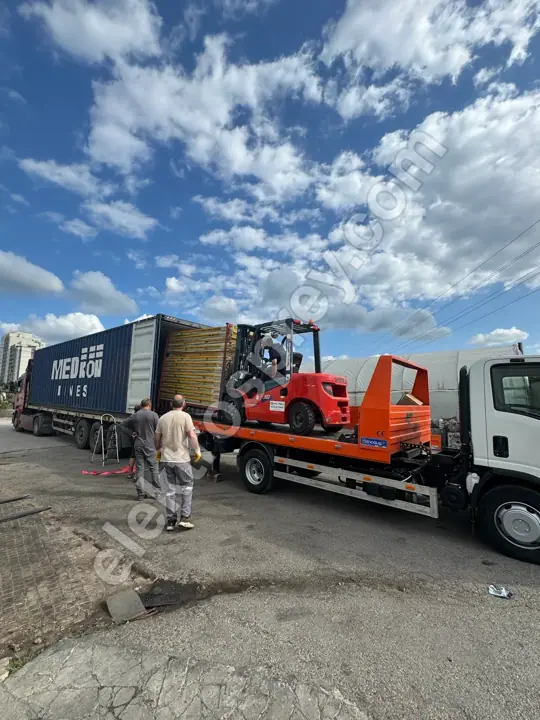
How many containers a powder coating line fills is decided by the cross-section of your largest part, not by the throughput of the line. Three dimensions build the calculation: the 12.03 × 2.35 × 2.70 m internal volume of a 40' High Cube, the 12.03 × 2.35 × 2.39 m internal volume of a standard 40', and the rule that anything failing to fit either one drops automatically onto a flat rack or into an open top. In practice a single manual powder coating unit with a small booth fits comfortably into one container; a tunnel type powder coating line running at 500–5,000 parts/hour spreads across several containers plus out-of-gauge carriers once you add oven panels, pretreatment modules, booth walls, conveyor bundles and the crated panels and guns.
That number becomes firm only after the module split plan is drawn, never before the line is built. Every part of the plant is manufactured to the customer's largest workpiece, and because there is no catalogue size there is no fixed "this line equals this many containers" table either. The real job of the split plan is not filling containers anyway: it is deciding which module comes out first on site.
Container types and where each module lands
The split plan starts with the internal dimensions of the carrier. The door opening is a few centimetres narrower than the internal width, so a module that "exactly" matches the internal figure usually will not pass the door — which is why module cross-sections are kept below the nominal internal size.
| Carrier | Approx. internal size (L × W × H) | Loading direction | Modules it takes |
|---|---|---|---|
| 20' standard | 5.90 × 2.35 × 2.39 m | Through the door | Panels, gun sets, cable, spare part crates |
| 40' standard | 12.03 × 2.35 × 2.39 m | Through the door | Conveyor rail bundles, fan-motor groups, filter cartridges |
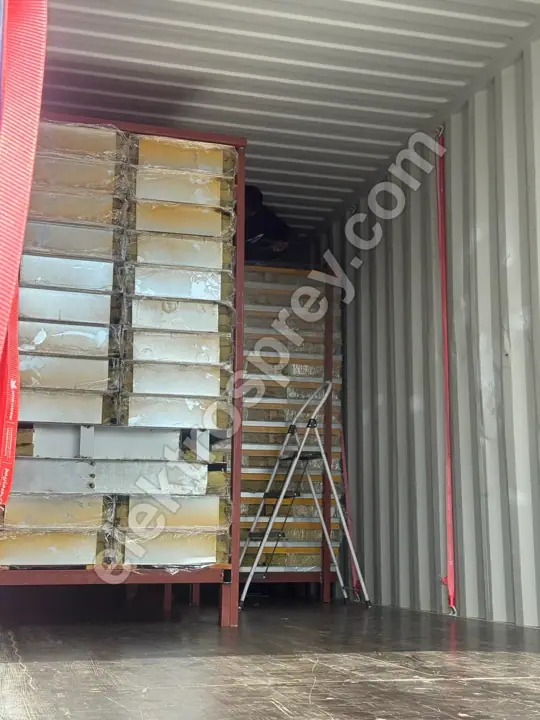
| 40' High Cube | 12.03 × 2.35 × 2.70 m | Through the door | Booth panels, oven panel stacks, insulation packs |
| Open top | Same floor as 40' HC, roof open | Craned from above | Welded bodies within width but over height |
| Flat rack | No side walls, folding end walls | Craned from side or above | Oven body, tunnel module, welded tank body |
The rule is blunt: if width and height clear the container door it travels as a container load, if not it is out of gauge. Where that threshold is crossed, how a flat rack differs from an open top and which way each option pushes the cost is covered separately in when out-of-gauge OOG and flat rack are needed.
Where the line is actually cut
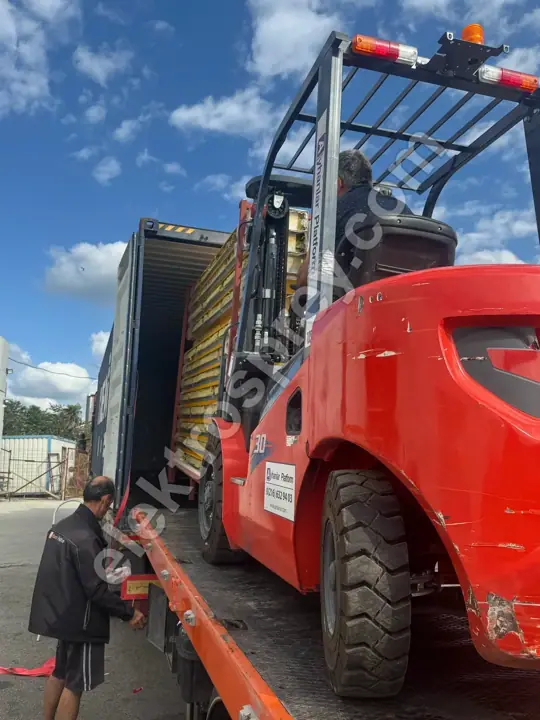
A module boundary is set by whichever of three constraints is tightest: the internal size of the carrier, the rigidity of the part itself (a body must not twist in transit no matter where it is cut), and the difficulty of rejoining it on site. The third is the one usually ignored — yet every extra cut is one more sealing and levelling job for the erection crew.
| Line component | Where it is split | Typical carrier | How it rejoins on site |
|---|---|---|---|
| Box type electric oven body | Into 10 cm rock wool insulated panels | 40' HC (panels laid flat) or flat rack | In panel number order, off the corner profile |
| Top-loading pallet oven body | Side walls, roof and door group separate | Flat rack | Frame erected first, then panels clad on |
| Oven fan / heater / burner group | Single unit, not split | Container, crated | Fitted after the body is closed |
| Filtered powder coating booth | Panels and cartridge filter unit separate | 40' HC | Panel shell first, then filter unit connection |
| Pretreatment tunnel | At the flanges between stage bodies | Flat rack / open top | Flange sequence, then pumps and nozzle piping |
| Dip tanks | Welded body, cannot be split | Flat rack | Lowered in one piece, crane mandatory |
| Conveyor rail and chain | Bundles under 6 m or 12 m | 40' container | After the hanger system is up |
| Control panel, PID cabinet | Separate crate with desiccant | Container | Last, together with the wiring |
| Powder guns and control units | Wooden crate with foam inserts | Container | At commissioning |
Sensitive groups — cartridge filters, PID panels, gun sets — never share a crate with steel bodywork. Their vibration and humidity tolerances are not the same: a wall panel feels nothing on a sea crossing while a control board may not survive the identical trip.
Why the loading order sets the assembly order
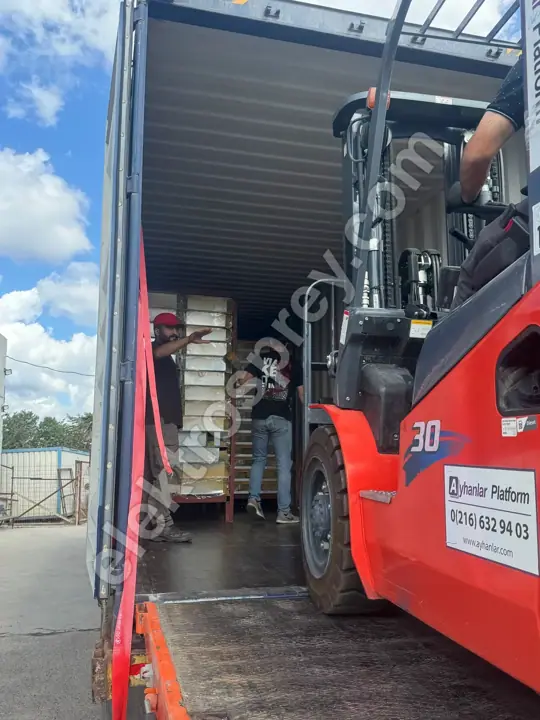
A container works LIFO: the last item in is the first item out. That single sentence explains why the split plan is an assembly decision rather than a shipping one. If the module you need first on site sits at the back of the box, you have to unload everything in front of it, stack it somewhere, and keep it there until erection is done. In a tight factory that costs days.
The correct loading order is the reverse of the assembly order:
- Deepest in: whatever is installed last — gun sets, control units, commissioning material.
- Middle: panels, cable tray, fan-motor groups, filter cartridges.
- Nearest the door: whatever goes up first — conveyor rail bundles and the hanger system, then booth and oven panel stacks.
Out-of-gauge parts sit outside this sequence; they arrive on their own carriers and are craned straight into position. That is exactly why the flat racks are scheduled to reach site before the containers: until the oven body and tunnel modules are standing, the panels coming out of the containers have nowhere to go. The step-by-step site sequence and how long each step takes is set out in site assembly order and duration.
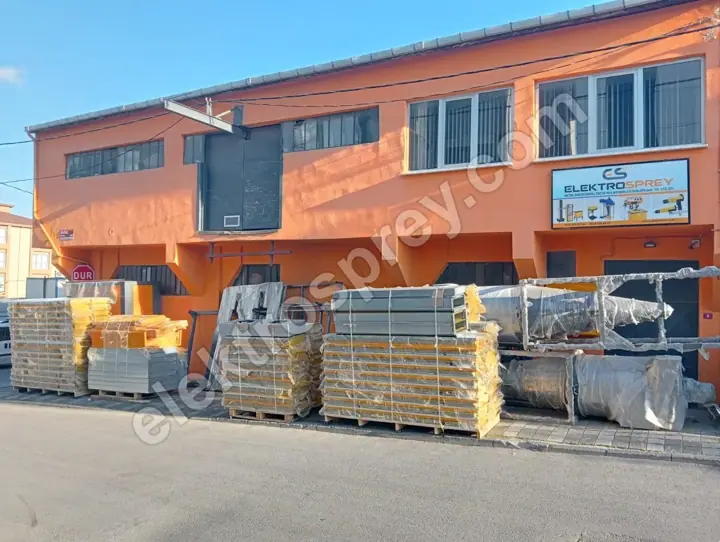
Decisions that reduce the container count
The container count is not fate. A handful of choices in the split plan move it visibly.
Stack panels flat, not upright. Oven and booth panels palletised flat use the full 2.70 m height of a High Cube. The same volume carries far fewer panels when the stack stands on edge.
Fill the void space. Cable, bolts, gaskets and insulation material go into the gaps between panel stacks. This lowers the container count and stops the stacks shifting in transit — but every crate number must still appear separately on the packing list, otherwise the part being hunted for on site cannot be found.
Avoid cutting a body just to fit. Every extra cut is site labour. Splitting a body in two to squeeze it into a container wins on freight and loses on erection. For a one-off shipment that trade usually resolves in favour of not cutting and paying for the flat rack.
Watch the weight limit, not only the volume. A container can hit its tonnage limit long before it looks full. With insulated oven panels and welded bodies the governing figure is weight, so the box gets closed while it still looks half empty. Route, Incoterm and documentation decisions are gathered in powder coating plant shipping and delivery; to see the whole investment in order, our pillar guide powder coating plant setup guide is the right starting point.
Frequently asked questions
How many containers does a powder coating line fill?
A firm number comes only once the module split plan exists. A small booth with a manual unit may need a single container; a complete tunnel line with pretreatment, oven, booth and conveyor needs several 40' High Cubes plus out-of-gauge carriers. The driver is not the throughput of the line but the cross-section of your largest part — and since the line is built to that part, the figure is recalculated for every project.
Will an oven body fit inside a container?
Usually not. A box type electric oven body is built from 10 cm rock wool insulated panels, and that insulation thickness adds to the internal chamber width, so the total width normally exceeds the container door opening. The answer is not to ship the body whole but to ship it as panels: they are numbered, dismantled, palletised flat and reassembled on site in the same number order. Only small-volume ovens travel as a single body.
Does splitting into modules make erection slower?
Yes, and that is a deliberate trade. Every extra cut creates a joint to bolt, seal and level on site. So the split plan is drawn to minimise cuts, not containers. If cutting a body saves freight but costs more in erection, it is left whole and moved to a flat rack.
What happens if the loading order is wrong?
You pay for it in double handling. If the conveyor rails needed first are at the back of the container, every crate in front has to come out and be stacked somewhere inside the factory — costing floor space, a forklift and days. A container loaded in the right order puts the part the erection crew needs on the day they need it right at the door. This is why crate numbers on the packing list are matched to the assembly sequence.
Who tracks the crate numbers?
The packing list carries the number, contents, dimensions and weight of every crate, and the erection crew reads it in assembly order on site. An unnumbered crate, or one with no contents declared, causes trouble at customs and again on site. Every line we build is delivered with a numbered packing list and a 2-year manufacturer's warranty.
Summary
Asked properly, "how many containers?" is really "where do we cut it?". Every module that fits the 12.03 × 2.35 × 2.70 m internal volume of a 40' High Cube travels as container cargo; every body that does not goes onto a flat rack or into an open top. Oven and booth bodies ship as panels, the pretreatment tunnel ships at its flanges, the conveyor ships in bundles, and panels, filters and gun groups are crated apart from the steelwork. The loading order is the reverse of the assembly order, because a container is LIFO and the last item in is the first item out. And every extra cut made to save a container comes back as labour on site.
Send us the dimensions of your largest part, your factory door opening and the crane access on site — we will draw the module split plan and the crate-level loading order around them.