
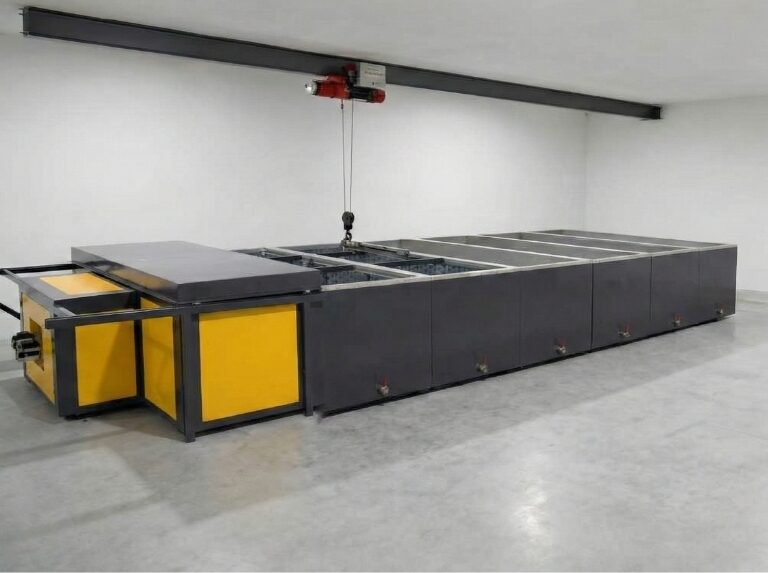
Dip Type Surface Treatment and Washing Line
Dip Type Surface Treatment and Washing Line
About This ProductDip Type Surface Treatment and Washing Line
Metal surfaces must be cleaned of dirt, oil and oxide layers before painting. The dipping method provides homogeneous cleaning and chemical adhesion even on complex shaped parts.
Line Stages:
- Alkaline degreasing (hot/cold)
- Rinse bath series
- Iron phosphate or zinc phosphate coating
- Passivation or chrome-free alternative
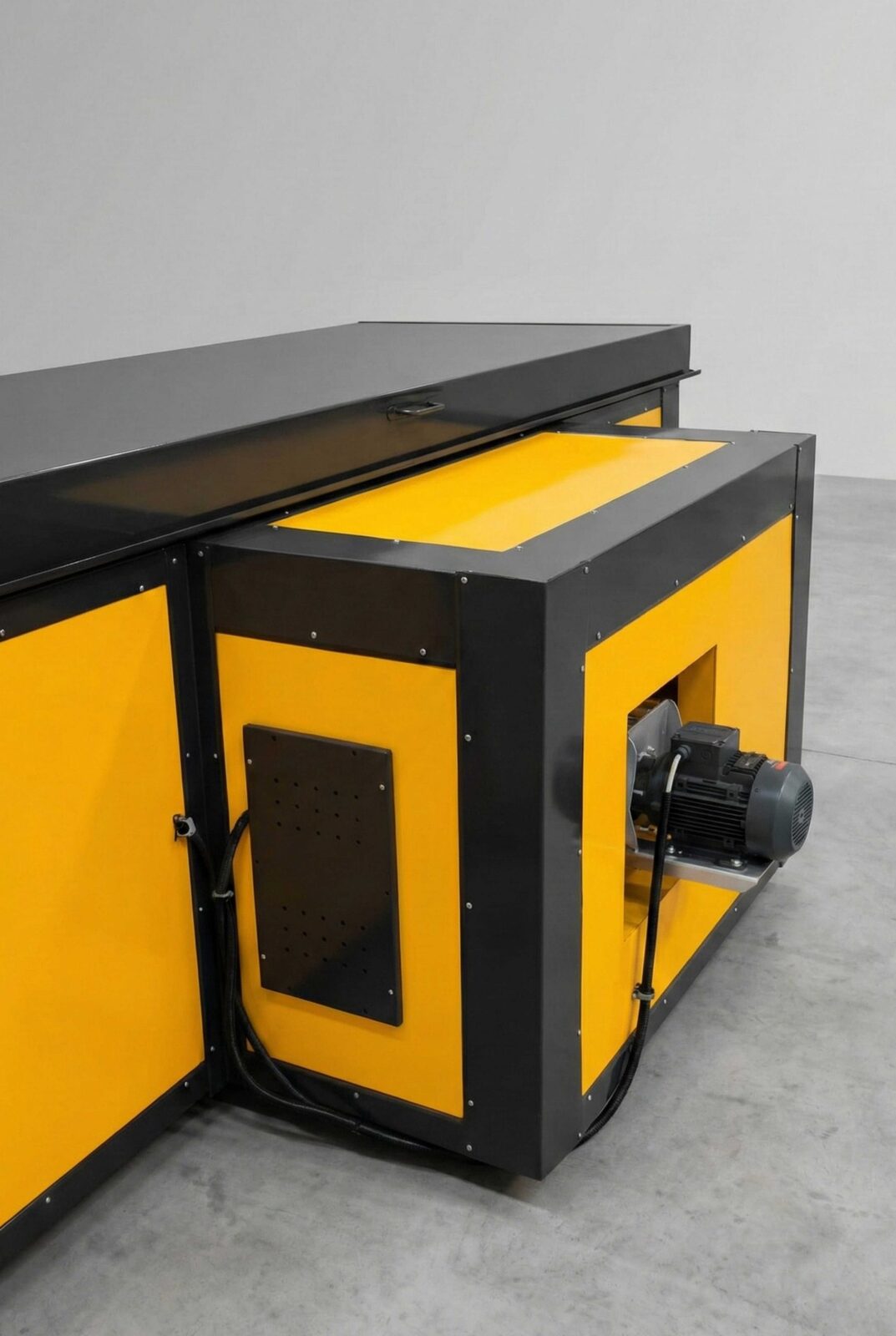
- Hot air drying oven
Our Videos
 Video
Video
Photos & Videos
Why pretreatment cannot be skipped
Paint bonds to the surface chemically. On a surface left with oil, rust or dust that bond is never formed; the defect appears after the oven and the part is reworked. Saving on pretreatment is therefore the most expensive saving there is. Our dip type line performs degreasing, phosphating, passivation and drying in sequence. The line is used not only ahead of powder coating but also to prepare parts for wet painting; what matters is surface cleanliness and the conversion coating, not the painting method.
Dipping or spraying
Dipping is superior on complex geometries with internal surfaces and cavities: the chemical reaches every face, including places a spray jet cannot enter. On flat, large-area parts a spray tunnel is faster and needs a smaller chemical circuit. The decision follows the part; tell us what you will coat and we build the line around it.
Tank count and drying
Tank count is set by how contaminated the parts are and the corrosion resistance targeted; in the plant project this is fixed as the pretreatment stage count. Drying is part of the line and cannot be skipped: water remaining on the part after rinsing must be removed before the curing oven. Otherwise staining and adhesion problems follow, and that defect is charged to the line, not to the painter.
Water, effluent and operation
A pretreatment line consumes water and produces effluent. Discharge permits, treatment or a disposal contract vary by region, and this belongs to the operating permit rather than the machine — when it is skipped, the plant stands ready and waiting. This is why we discuss the water and effluent side together with the line design. The product carries a 2-year warranty.
The line is designed together with your chemical supplier
A pretreatment line is not just a row of tanks; the concentration, temperature and cycle time of the chemistry are part of the line. This is why we ask for your chemical supplier's specification when designing: tank count, heating requirement and dwell times are set according to it. Changing the chemistry later is often possible; changing the number of tanks is not — which is why the decision belongs in the project phase.
Technical Specifications
Frequently Asked Questions
Is surface pretreatment mandatory before powder coating?
Yes. Paint will not adhere to a surface left with oil, rust or dust, and the defect appears only after the oven, when the part has to be reworked. A dip line performs degreasing, phosphating, passivation and drying in sequence.
Dip or spray pretreatment?
Dipping is superior for complex geometries and internal surfaces, because the chemical reaches every face. For flat, large-area parts a spray tunnel is faster. We build the line around your part type.
How many tanks are needed?
Tank count is set by how contaminated the parts are and the corrosion resistance targeted. It is fixed as the pretreatment stage count in the plant project.
Is drying part of the line?
Yes. Water remaining on the part after rinsing is dried before the curing oven; otherwise staining and adhesion problems follow.
Can the line be used outside powder coating?
Yes. A dip type pretreatment line is also used to prepare parts for wet painting; what matters is surface cleanliness and the conversion coating, not the painting method.
Request Quote
Share your details and we'll prepare a custom price quote and technical solution for you.
Request Quote
Dip Type Surface Treatment and Washing Line