
ATEX Compliance: Which Documents Belong in the Handover File?
There is no single sheet of paper that answers whether an ATEX certificate is mandatory for a powder coating booth; the handover file holds six items that only work together. This article turns the paperwork your insurer and safety auditor will ask for into concrete questions you put to the manufacturer at quotation stage.
 Enlarge
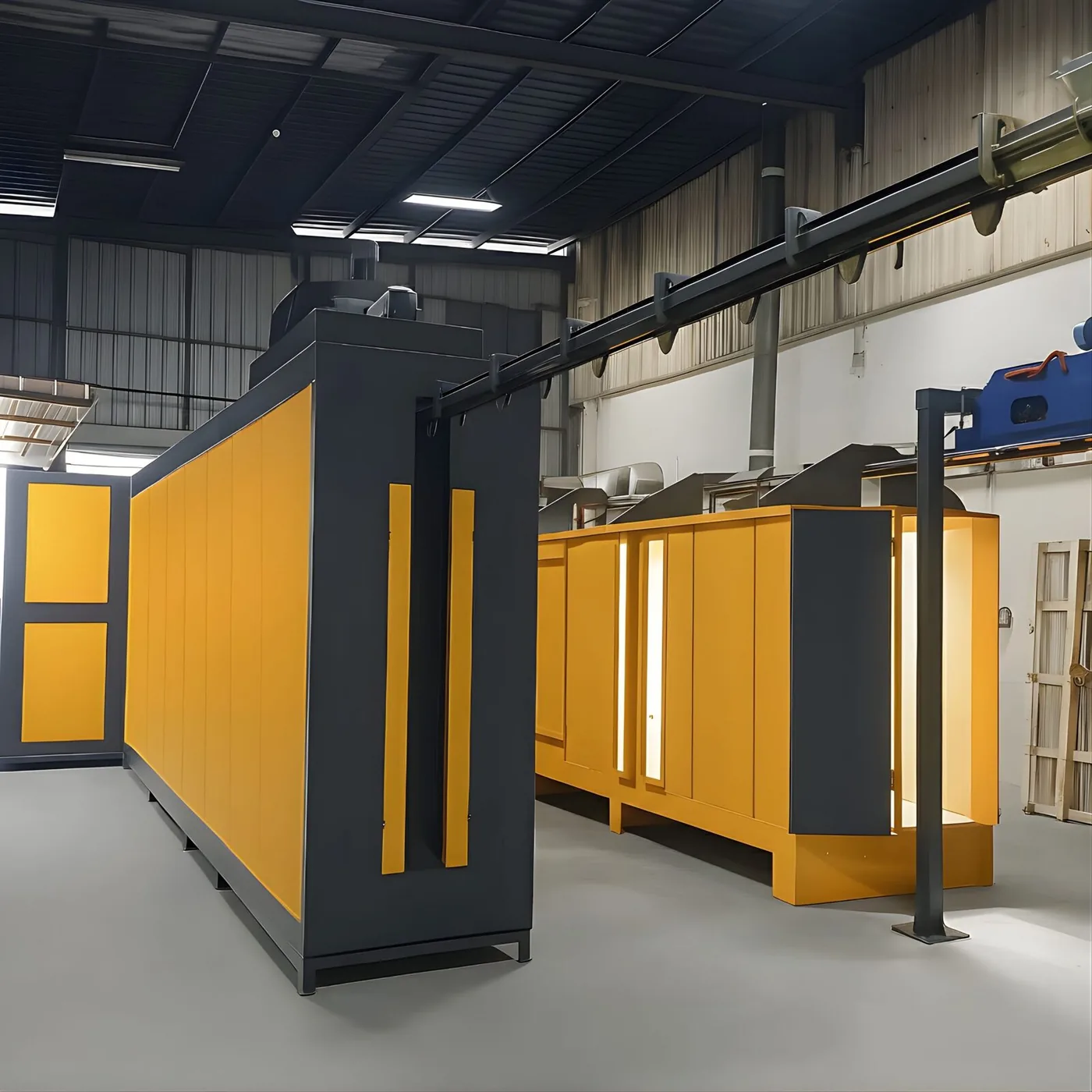
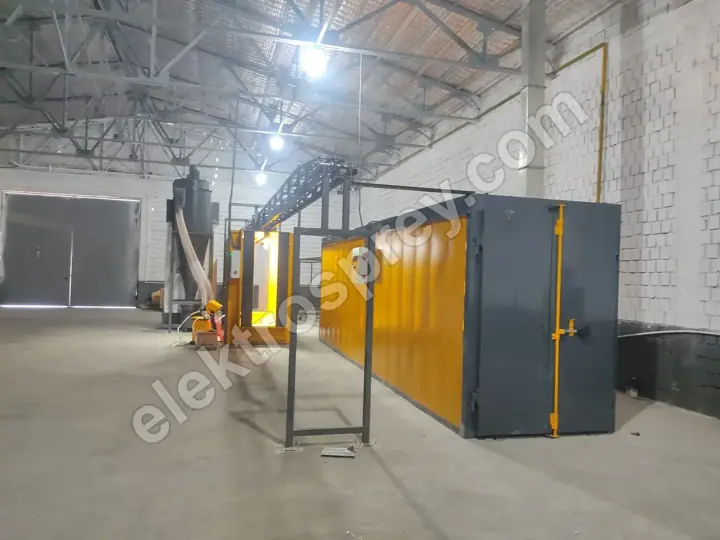
If you are asking whether an ATEX certificate is mandatory for a powder coating booth, the honest answer is this: there is no single sheet of paper called "the ATEX certificate". The handover file must hold six items that only work together — the zone classification note, the equipment category declaration, the technical data feeding your explosion protection document, the earthing continuity record, the CE declaration, and the operating and maintenance manual. The water curtain wet paint booth we build is designed to an ATEX Zone 2 assumption and captures 99% of overspray; in filtered powder booths internal air velocity is held in the 0.5–0.8 m/s band. Those figures are not the file — they are the measurable evidence that makes it defensible.
This article is about the paperwork side, not the design side. How the booth's earthing architecture is built is a separate subject, covered in ATEX and earthing in a coating booth. The question here is narrower: when the insurer or the auditor sits in front of you, what is in the folder, and which page of it must you demand from the machine supplier?
Why there is no single "ATEX certificate"
ATEX legislation creates two separate obligations, and the two are constantly confused.
The first is the equipment side: the category, marking and declaration of equipment placed on the market for use in a potentially explosive atmosphere are the manufacturer's responsibility. The second is the workplace side: which volume falls into which zone and what protective measure answers it is the operator's responsibility. The machine supplier cannot hand the second obligation to you finished; it can only supply input to it.
This is where things break. The buyer orders "an ATEX booth", gets a one-page declaration at handover, and then the auditor asks for the area classification and the explosion protection document. They are not the same thing. The correct purchasing sentence is: "I want the ATEX equipment declaration and the technical data feeding my explosion protection document in the handover file."
The six items to look for in the handover file
| # | Item | Whose responsibility | What happens without it |
|---|---|---|---|
| 1 | Zone classification note (which volume, which zone, on what assumption) | Operator — manufacturer supplies input | Equipment selection has no visible rationale |
| 2 | Equipment category and marking declaration | Manufacturer | Conformity of devices inside the booth is unproven |
| 3 | Ventilation and air flow data | Manufacturer | The zone classification rests on nothing |
| 4 | Earthing and continuity measurement record | Manufacturer + commissioning | Static discharge risk is unevidenced |
| 5 | CE declaration and technical file reference | Manufacturer | The machine is delivered legally incomplete |
| 6 | Operating, maintenance and cleaning instructions | Manufacturer | Residue build-up becomes an audit finding |
All six belong in one folder, signed with the commissioning report. The gap we see most often is row four: earthing was installed but never measured, so it never entered the record. To an auditor, unmeasured earthing is earthing never done.
Who classifies the zones, and how it appears in the file
Zone classification depends on how often and for how long an explosive atmosphere is present. The manufacturer cannot make that decision for you, because some variables belong to the operation: shift length, material properties, cleaning frequency, ventilation outside the booth, and interaction with neighbouring processes.
What you get from the manufacturer is not the decision but the data it rests on: internal air velocity and flow rate, extraction direction, filter type and cleaning regime, the position of the booth openings, and whether lighting and electrical equipment sit inside or outside. Your own specialist then performs the classification and fills in row one.
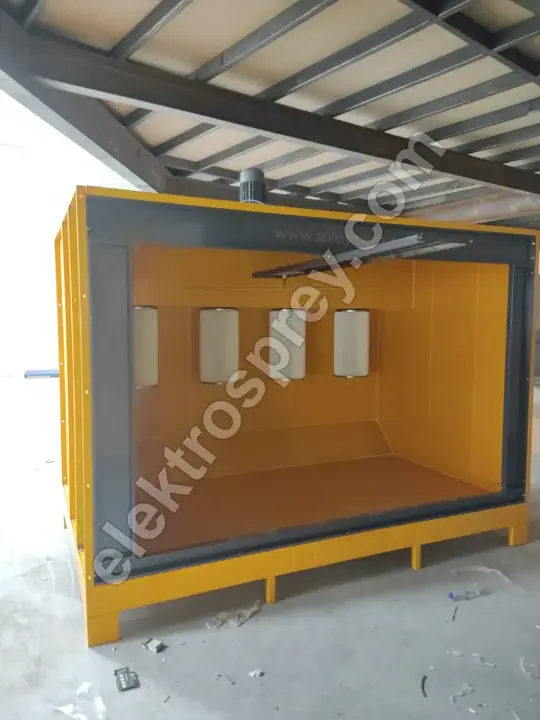
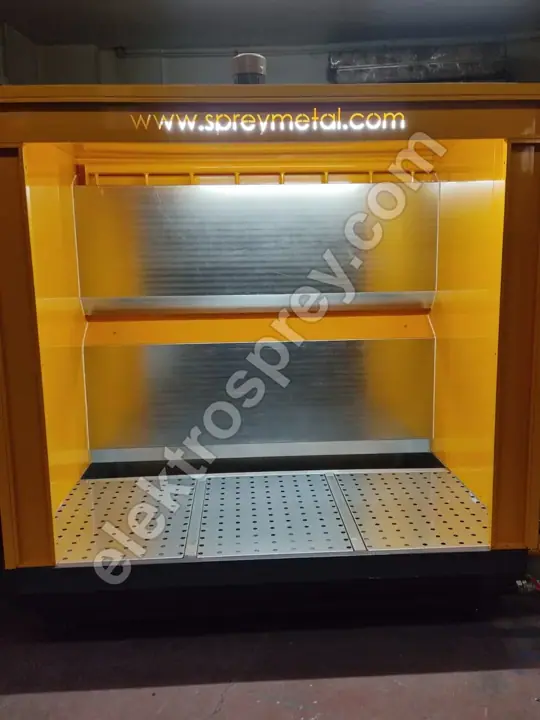
The concrete example we declare: the water curtain wet paint booth is designed to an ATEX Zone 2 assumption, and the closed-circuit water system, antistatic grating floor and 600+ lux LED lighting are part of that assumption. Solvent vapour behaves differently from suspended solids, which is why the two booths carry different files. On the powder side we do not write a zone number into the quotation — your risk assessment writes it; we supply ventilation and recovery data in writing.
Questions to ask at quotation stage, and acceptable answers
| Question | Acceptable answer | Answer to reject |
|---|---|---|
| What category is the electrical equipment inside? | Equipment list plus each item's marking, in writing | "It is all ATEX" |
| Will ventilation data be in the handover file? | Flow rate, air velocity and extraction direction, as numbers | "It complies with the standard" |
| Will earthing continuity be measured? | The measurement appears in the commissioning report | "We always earth it" |
| What is the filter cleaning regime? | Pulse-jet cycle and maintenance interval, in writing | "It cleans itself" |
| What scope does the CE declaration cover? | Booth, fan and control panel listed separately | One generic single-line statement |
| How are dimensions decided? | Engineered around your largest part | Picked from a catalogue |
That last row is not a slogan, it is the production method: there is no catalogue size. Booth, oven and conveyor are built around the customer's largest part, so the air flow rate and zone assumption in the file are project-specific. You cannot certify your plant by copying another plant's folder.
Powder booth versus water curtain booth: where the file diverges
The source of risk differs between the two booth types, so the file's centre of gravity shifts too. On the powder side the issue is suspended solids and the deposited layer; on the water curtain side it is solvent vapour. For the filtered powder coating booth you document 95%+ recovery and 99.9%+ cartridge filter retention, with the chosen configuration in the 2–12 gun range. On the water curtain side, water circulation continuity, gun interlock on curtain failure and the antistatic floor come first.
This is why the maintenance instruction belongs in the file. Inside a powder booth the accumulating layer becomes a second source of risk over time; if the cleaning interval is not written down, it is the first thing an audit asks about. We gathered the technical side of booth selection in choosing a powder coating booth; the rule is simple: if you cannot document the selection, you cannot defend it.
Where audits and insurance most often stall
What an insurer asks for is narrower than a safety audit, but stricter: the loss adjuster wants proof the equipment was operating under the conditions it was declared for at the moment of the incident. That makes continuity records — periodic earthing measurements, filter change logs, fan maintenance logs — as important as the static documents.
Three gaps come up most often. First, a light fitting or portable fan added after handover sits outside the file. Second, the booth is relocated or the line extended and the classification is never updated. Third, the scope of the CE declaration is misread; we set out what CE marking covers across a plant in what CE marking covers in a coating plant. None of the three is a machine fault — all three are failures to maintain the file.
Frequently asked questions
Is an ATEX certificate mandatory for a powder coating booth?
The question as phrased is incomplete. What is mandatory is that equipment used where an explosive atmosphere may form is of the appropriate category, and that the operator has an explosion protection document. You cannot order one certificate called "the ATEX certificate" and file it away; you need the equipment declaration, the technical data and the workplace assessment together.
Should the manufacturer perform the zone classification?
No — classification is the operator's responsibility. The manufacturer feeds that decision with air flow rate, extraction direction, filter regime and equipment layout. If a supplier says "we already determined the zone, don't worry", your file has no foundation at audit. The correct sentence is "we supply the data, your specialist classifies".
Does CE marking cover ATEX?
It does not; they are different obligations and both must be present. CE declares the general conformity of the machine. The explosive atmosphere assumption is handled separately and concerns the category of equipment inside the booth. Ask for both to be written out separately in the quotation; one line reading "CE and ATEX compliant" means nothing at audit.
Who prepares the explosion protection document?
The operator prepares it, usually with the safety officer and the responsible engineer. The manufacturer's job is not to write the document but to supply, in full, the data it rests on. If the handover file already holds ventilation data, the earthing measurement and the equipment list, it is finished quickly; if not, the process drags on for months.
How do you check the file when buying a second-hand booth?
First physically compare the equipment list against what is actually installed; retrofitted lighting, fans or control components are the commonest deviation. Then have earthing continuity re-measured and air flow re-checked, because duct and filter condition change over the years. If the file is not current, the price advantage of a used booth is spent again on documenting it.
Summary
ATEX compliance is not a certificate you buy — it is a file you build. Six items are looked for at handover: the zone classification note, the equipment category declaration, ventilation data, the earthing measurement record, the CE declaration and the maintenance instruction. Four come from the manufacturer, two from the operator, and none substitutes for another. Ask for numbers at quotation stage; do not settle for the word "compliant". In a complete system such as a tunnel type powder coating plant the file does not stop at the booth — pretreatment, oven and conveyor go into the same folder. Every system we build is delivered with a 2-year manufacturer's warranty.
Send us your largest part, the material type you will use and your ventilation layout — we will put in writing, from the start, who fills in which line of the handover file.