
Same Code, Different Colour: What Really Causes Batch-to-Batch Colour Variation
When two parts coated with the same colour code end up side by side on an assembly and look different, the culprit is usually the line, not the paint batch. This article explains how to separate the contribution of oven uniformity, dwell time, film thickness and reclaim ratio from the contribution of the powder batch, and the record-keeping that makes that separation possible.
 Enlarge
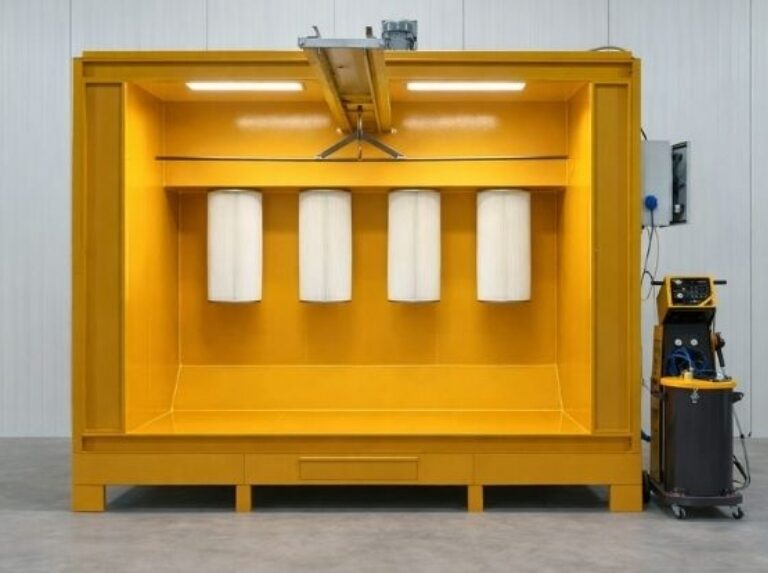
A large share of powder coating batch-to-batch colour variation comes from the line, not the powder batch: oven uniformity, the time a part actually spends in the oven, film thickness and the ratio of reclaimed powder in the mix can make one colour code look like two. Even in a box oven with ±3 °C uniformity and 16 curing profiles, a part that stays a few minutes longer than the rest of the load can darken visibly; even with a 95%+ reclaim rate in a filtered booth, a line that never records its virgin-to-reclaim ratio will drift in tone. Before you raise a batch rejection with your powder supplier, do one thing: freeze those four variables and run the same powder again. That single experiment splits the responsibility in half.
One point up front: the numerical acceptance limit for colour difference is not a feature of the equipment we build. The threshold comes from the customer's specification — an architectural facade profile, a white-goods panel and an agricultural machine chassis do not share the same limit. Your job as a coating plant is not to set the threshold but to stay repeatably below the one written in the spec. Line design and record discipline are what produce that repeatability.
Why the same code still produces different colour
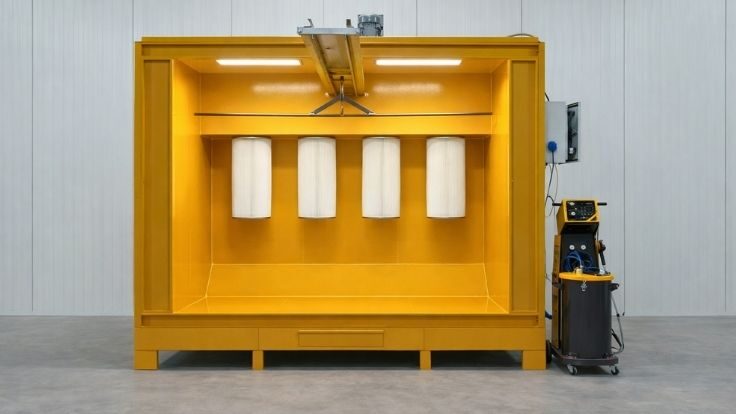
The colour of a coated part is not a code on a screen; it is an optical result produced by three things together: pigment distribution, film thickness and degree of cure. Only the first is under the powder manufacturer's control. The other two are decided entirely on your line.
- Film thickness changes opacity. A thicker film hides the substrate completely; a thin film lets it read through. The effect is largest on light shades and metallics.
- Degree of cure depends on the thermal history of pigment and resin. A part held longer at the same temperature can yellow or shift in tone; an under-cured part usually looks flat and washed out.
- Powder mix changes as the fine-particle fraction of the reclaimed powder rises. Fines charge differently and leave a different pigment distribution on the surface.
So "the same code" does not mean the same colour; it means the same colour under the same line conditions. Every sensible discussion of batch variation is built on that sentence.
The four line variables and how they move colour
| Variable | How it drifts | Typical colour symptom | How it is fixed |
|---|---|---|---|
| Oven uniformity | Local cold/hot spot, disturbed air circulation | The same positions in every load come out different | Heat mapping, confirming the ±3 °C band |
| Dwell time | Conveyor speed change, door openings, manual loading | Long-dwell parts darker/yellowed, short-dwell parts flat | Fixed profile, conveyor speed on record |
| Film thickness | Gun output, distance, operator-to-operator difference | Clear tone difference on light shades and metallics | Dry film measurement, written setting card |
| Reclaim ratio | Unsieved powder, unrecorded mixing, accumulating fines | Tone drifting slowly as the shift progresses | Written virgin/reclaim ratio, sieve interval |
| Powder batch | Supplier's pigment or resin batch change | A step change the moment a new bag is opened | Batch number log, incoming reference panel |
| Pretreatment | Stage chemical concentration, rinse quality | Surface energy difference to opacity and gloss shift | Bath monitoring, regular analysis |
The first five rows belong to your plant; the sixth and the powder batch row are largely external. Separating cause from cause means freezing the first five and testing the sixth.
The separation test: line share versus powder share
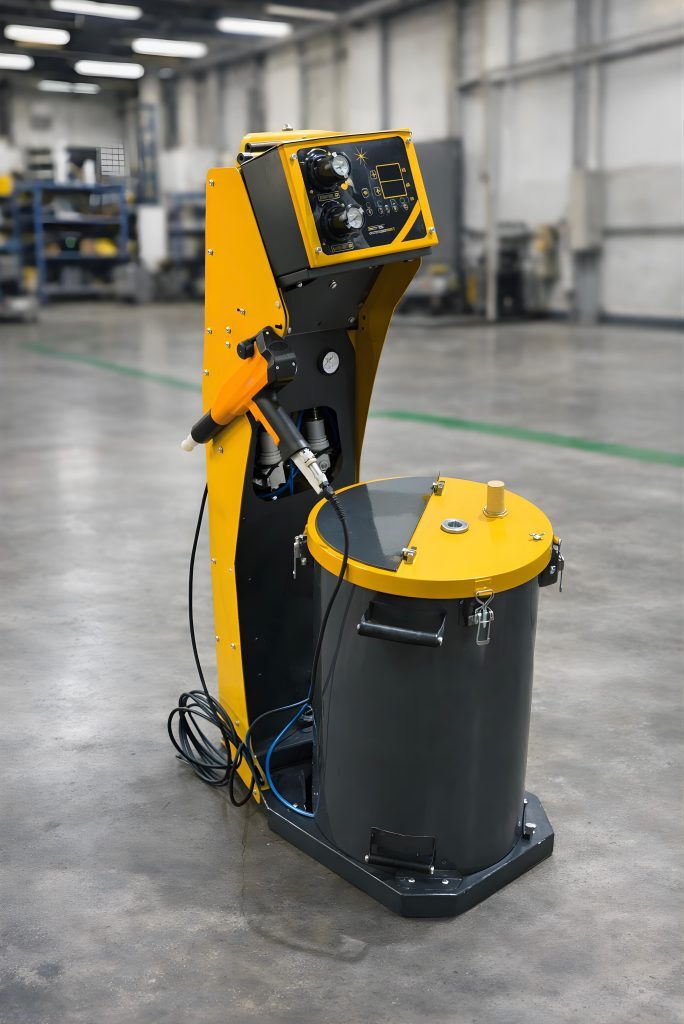
The fastest way to find the culprit is not to argue but to run a controlled test. It takes half a day and requires no investment.
- Prepare reference panels. Ten flat test panels of the same material, same gauge, through the same pretreatment. Work with panels, not with the production part; part geometry blurs the variable you are chasing.
- Coat from the old batch and the new batch separately. Same gun, same kV, same distance, same film thickness target, same curing profile.
- Cure them in the same load. Both groups at the same time, in the same zone of the oven. This removes oven uniformity from the equation.
- Then do the opposite: take a single batch and spread it across different oven zones and different dwell times.
Reading the result is straightforward. If the first test shows a difference and the second does not, the powder batch is a legitimate topic. If the first shows nothing and the second does, the problem is oven and dwell time — and a non-conformance report sent to the supplier is unfair and hides the real cause. If both show differences, two effects are stacked; stabilise the line first, then re-evaluate the powder. The measurement routine for the oven side is set out step by step in oven temperature uniformity.
Reclaimed powder: the quietest variable
In a filtered booth, 95%+ reclaim is the most valuable efficiency feature of the line; for colour stability it is the point that demands the most attention. The reason is simple: the particle size distribution of the powder collected back from the booth is not the same as that of virgin powder. Overspray is rich in fines, and every time it re-enters the circuit the average particle size of the mix drops a little further. Fines charge more readily, give different opacity, and produce a visible tone shift, especially on metallics and light shades.
This shift is cumulative, not sudden. The gap between a part coated in the morning and one coated in the evening is small; the real problem appears three weeks later, when a part reaching assembly is placed next to one coated in the first week. That is why the reclaim ratio is not an efficiency figure but a process parameter, and it needs a written rule like any other: how many kilos of virgin and how many of reclaim at each refill, what the sieve interval is, and which cleaning steps apply at colour change. Why reclaim behaviour and colour-change behaviour must be judged together when choosing equipment is covered in choosing a powder coating booth; the filtered powder coating booth we build with 2–12 guns is always dimensioned to the customer's largest part.
For critical or light-shade work the strictest workable rule is this: do not use reclaim for that job. Run virgin powder only and route the overspray to another job. It costs more, but it is small next to the cost of a part rejected at assembly.
Record discipline: colour variation is a traceability problem
What usually loses the colour argument is not measurement but the absence of records. If you cannot answer "which part, with which powder batch, at which mix ratio, on which curing profile, on which date", your conversation with both supplier and customer becomes an exchange of opinions.
| Record field | Where it is kept | What it saves |
|---|---|---|
| Powder batch number and receipt date | Powder store intake form | Whether the shift coincides with a batch change |
| Virgin / reclaim ratio | Refill log | Tracing cumulative tone drift |
| Film thickness readings | Shift control sheet | Ruling out opacity-driven difference |
| Curing profile and dwell time | Oven record printout | Proving a thermal history difference |
| Conveyor speed / load pattern | Production order | Explaining differences within one load |
| Reference panel archive | Physical sample cabinet | Visual comparison against a later batch |
The last row matters most. Keeping a dated, batch-numbered reference panel coated from every incoming powder batch closes an argument months later in minutes. It is the single highest-return practice that requires no instrument at all.
The colour difference threshold: who sets the number
Colour difference is measured with a spectrophotometer and reported as a difference value. But the acceptance threshold is not an equipment specification; it is written in the buyer's spec. Acceptance criteria under Qualicoat and GSB for architectural work differ from those used in appliance or machinery manufacturing, and the same customer may set one limit for an exterior part and another for a part hidden inside an assembly.
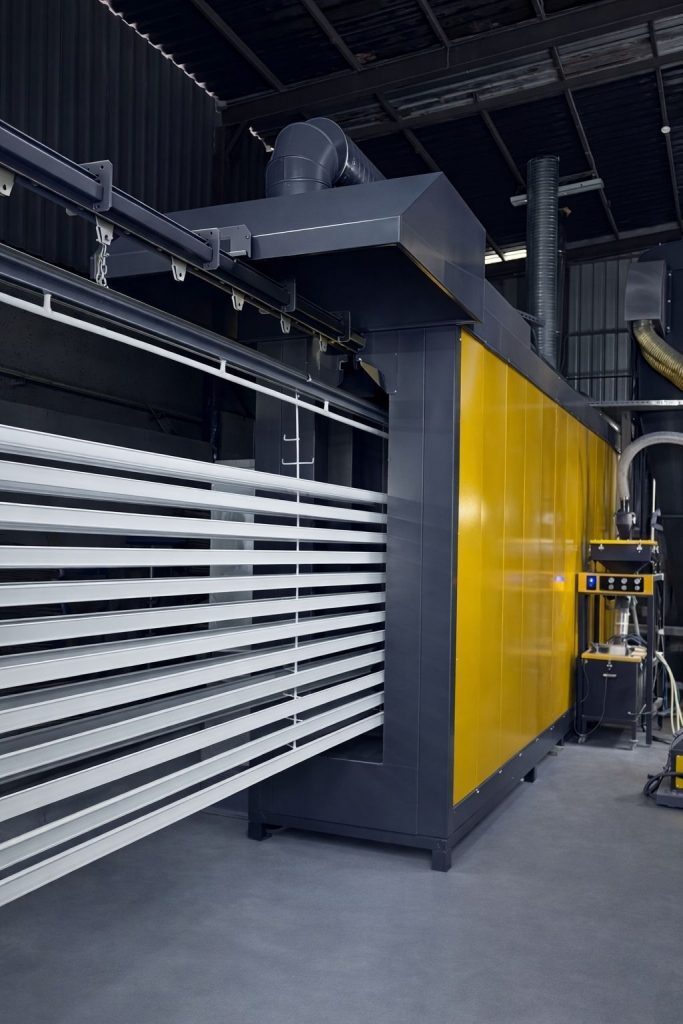
The correct order is this: ask for the specification at quotation stage, agree the threshold and the measurement method (how many points, which illuminant, which geometry) in writing, then verify with your own test panels whether your line can stay under that threshold repeatably. When the limit is tight the outcome is usually the same: reclaim is restricted, the curing profile is locked to one setting, and a separate production rule is written for that job. Capacity and cost must be calculated against that rule; on a continuous line such as a tunnel type powder coating plant a fixed conveyor speed makes the repeatability easier, whereas a batch box oven puts more of the discipline on the operator.
Frequently asked questions
How do I know whether the colour difference comes from the powder batch?
Through a controlled panel test. Coat the old and the new batch side by side at the same gun settings, the same film thickness and in the same oven load. Only if the difference appears between batches, while a single batch stays stable across different oven positions, is the powder batch a fair conclusion. A non-conformance report written without this test usually comes back.
How much does the reclaim ratio affect colour?
The effect is cumulative rather than sudden, and it is clearest on light shades and metallics. As the fine-particle fraction rises, opacity and tone drift slowly. For critical colours the safest approach is to run no reclaim on that job at all; for standard work, record and hold the virgin-to-reclaim ratio at every refill.
Does dwell time in the oven really change the colour?
Yes. Cure is determined by temperature and time together, and extra minutes at the same temperature cause yellowing on whites and light shades and a gloss or tone shift on dark ones. That is why dwell time is managed by a written profile rather than by "let it bake long enough". The same mechanism on the gloss side is detailed in gloss variation within the same batch.
What colour difference value should I be targeting?
No equipment manufacturer can give you that number. The threshold comes from the job specification and changes with the application. The right move is to obtain the threshold and the measurement method in writing at order stage, then measure with reference panels whether your own line can hold repeatability below it.
Parts cured in the same load differ — where do I look first?
At the oven. If the same powder, the same settings and the same dwell time were used, the only remaining variable is the temperature distribution inside the chamber. Produce a heat map; an electric box oven is built to work within a ±3 °C band, and a reading outside that band points to a concrete problem in air circulation, load pattern or insulation.
Summary
Batch-to-batch colour variation is usually argued as a supply problem but is in practice a process stability problem. The line's share comes down to four items: oven uniformity, dwell time, film thickness and reclaim ratio. Any verdict on the powder batch delivered before those four are frozen is a guess. Separation comes from a half-day controlled panel test; the lasting fix comes from record discipline — batch numbers, mix ratios, film readings, curing profiles and a dated reference panel archive. If you are planning the whole investment, our main guide how to set up a powder coating plant is the right starting point, and every line we build is delivered with a 2-year manufacturer's warranty.
Send us the specification of the job you are struggling with, your oven records and your mix-ratio log — we will separate out where the difference is coming from together.
For plants in the UK, North America and beyond
Where your line is installed shapes the paperwork, the power supply and the rules behind the choices described above.
- Gas burners and fuel trains are commonly built to EN 746-2 and EN 676. In North America, expect UL or CSA listed components and a review by the local authority or gas utility; commissioning usually needs the gas supplier's sign-off.
- For the UK, confirm with your importer whether UKCA or CE marking is expected. In the US and Canada, plan for UL or CSA requirements on the electrical side, and check any local documentation rules before shipment.
- For the UK, goods of Turkish origin move under the Türkiye–UK free trade agreement with an EUR.1 certificate or an origin declaration. For other destinations, the origin paperwork depends on that country's trade agreements, so check it with your importer early.
- North America runs at 60 Hz, and 480 V is common in industrial plants, so motors, fans and controls have to be specified for that supply from the start. Confirm the voltage and frequency on site before the line is designed.
Products mentioned: Filtered Electrostatic Powder Coating Booth · Box Type Powder Coating Oven (Electric) · Tunnel Type Electrostatic Powder Coating System
When you ask for a quote, tell us your country, supply voltage and frequency — get in touch.