
A.TR, EUR.1 and Certificate of Origin: Which Document for a Coating Plant?
What is an A.TR certificate and which countries is it issued for, and when do buyers need EUR.1 or a certificate of origin? The three documents answer three different questions, and issuing the wrong one holds the shipment at the buyer's customs. This article explains which document works in which country group, what a badly drawn document does to delivery, and the paperwork list to demand from the seller before signing.
 Enlarge
Exporting a coating plant involves three separate documents, and they do not do the same job: the A.TR movement certificate shows that the goods are in free circulation under the Türkiye–EU customs union, the EUR.1 movement certificate proves preferential origin under a free trade agreement, and the certificate of origin simply declares the country where the goods were manufactured. Across shipments to 40+ countries the pattern is consistent: what holds cargo is rarely a missing document, it is the wrong document, correctly issued. Duty rates, fees and validity periods vary by country, by agreement and by HS code, so never plan those three items from a number you read online — get written confirmation from your own customs broker and your chamber of commerce.
This article does not calculate duty. It tells an investor buying a tunnel type powder coating plant, or a single oven, which paperwork to demand from the seller before signing, and what happens at the port when that paperwork is drawn up incorrectly.
Three documents, three different questions
They get confused because all three are discussed under the word "origin". In fact they answer different questions:
- A.TR asks: is this item in free circulation inside the Türkiye–EU customs union? It does not ask where the item was made. An oven manufactured in Türkiye and a component that entered free circulation in Türkiye after import duties were paid both fall inside the scope.
- EUR.1 asks: under the rules of the preferential agreement between us, is this item genuinely of Turkish origin? Here the place of manufacture and the share of inputs matter; the product must count as having undergone sufficient working or processing in the country.
- A certificate of origin asks: in which country was this made? It grants no preferential reduction; it is a general declaration required by the buyer's customs authority, by import legislation, or by a letter of credit.
The practical consequence: A.TR and EUR.1 are not substitutes for each other. A single shipment may need both, neither, or only a certificate of origin. Which combination applies is decided by the buyer's country and the agreement in force with it. The seller cannot know this alone; the buyer, as importer, must confirm it with their own customs authority.
Which one works in which country group?
| Document | What it proves | Typically requested on | Duty effect |
|---|---|---|---|
| A.TR movement certificate | Free circulation under the customs union | Industrial goods shipped to EU member states | Preferential treatment; rate varies by HS code, ask your broker |
| EUR.1 movement certificate | Preferential origin under an agreement | Countries with a free trade agreement | Reduced rate; depends on the agreement text |
| Certificate of origin | Declaration of country of manufacture | Non-agreement countries, letters of credit, import permits | Usually no preference, yet often mandatory |
| Invoice declaration (approved exporter) | Origin, stated on the invoice | Some agreements, in place of EUR.1 | Depends on the agreement and value threshold |
| ATA carnet | Temporary admission | Exhibitions, demo machines, temporary movement | Not used for a sale shipment |
Treat the table as a list of questions to put to your counterpart, not as a rule. The right question is: "for our HS heading, is there preferential treatment in your country, and if so under which document?" The buyer's broker answers that in one sentence, and that document goes into the contract.
What happens on delivery when the document is wrong?
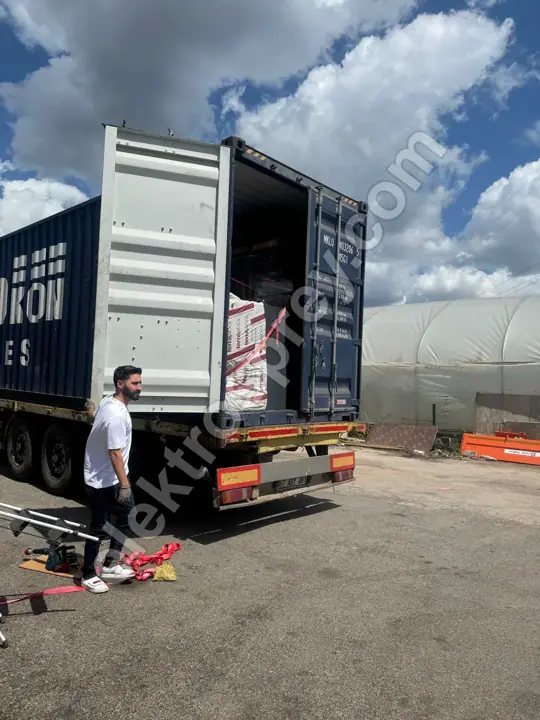
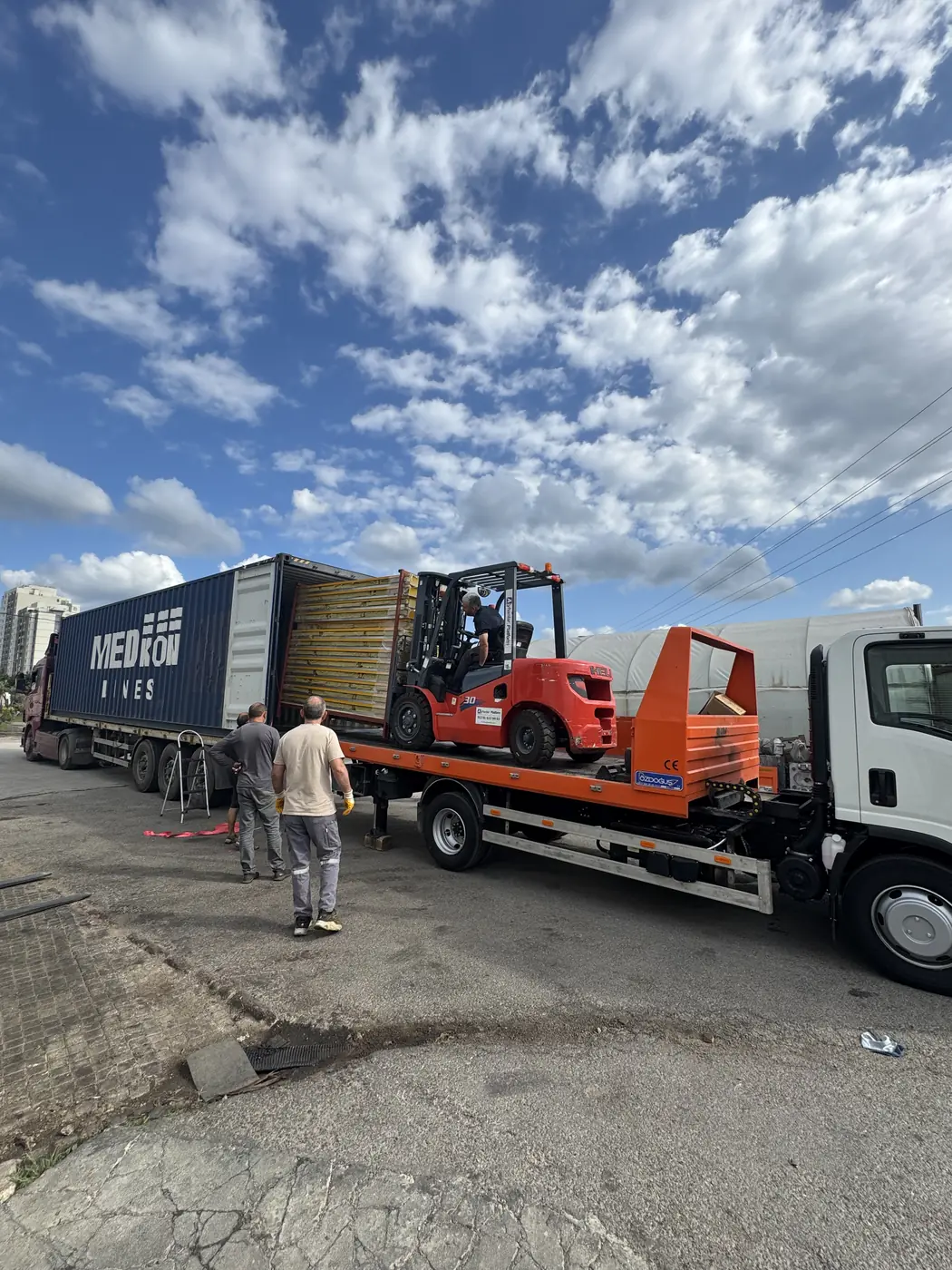
A coating plant is not a single line item. Oven shell, booth panels, conveyor sections, control cabinet and spares travel in the same shipment. A paperwork error therefore does not hold one crate, it holds the whole line.
| Error | Result seen at customs | Cost to the investor |
|---|---|---|
| Wrong document type (EUR.1 instead of A.TR) | Preference refused, full tariff applied | Unbudgeted duty; cargo is not released until it is paid |
| HS heading inconsistent with the invoice | Declaration amendment, re-assessment | Container waits at the port, storage and demurrage accrue |
| Package count or gross weight mismatch | Selected for physical inspection | Container is stripped and reloaded, packing damage risk |
| Consignee name or address incorrect | Document treated as invalid | A new certificate must be issued and the original copy delivered |
| Missing signature or stamped original | Cannot be presented | Goods held in the customs warehouse |
| Origin declaration conflicts with production records | Subsequent verification request | Retroactive duty and penalty risk, months later |
The last row is the dangerous one. Even after the goods clear, the importing administration can request subsequent verification of origin, and at that point production records, material invoices and work orders are asked for. So do not think "it cleared, we got away with it" — there must be a real manufacturing file behind an origin declaration.
The cost of a paperwork error is also tied to the transport plan. A container sitting at the port affects the packing, the bracing of the panels and the delivery date; we covered that chain in plant transport and shipping. Who pays those charges is decided not by the certificate but by the delivery term in the contract, and choosing Incoterms breaks that split down item by item.
The paperwork list to demand from the seller up front
A document not requested at contract stage will not exist at shipping stage. When ordering a line, ask the seller in writing for:
| Document | Why it is needed | When to ask for it |
|---|---|---|
| Proforma / commercial invoice | Basis of the declaration; HS code and value are read from it | At order confirmation |
| Packing list | Package count, gross and net weight, dimensions | Before loading |
| A.TR / EUR.1 / certificate of origin | One or more, depending on the buyer's country | Before shipment, per the buyer's confirmation |
| CE declaration and technical file | For entry into the EU and for installation | Committed in the contract |
| ISPM 15 marked wooden packaging statement | If wooden crates and pallets are used | At packing design stage |
| Insurance policy | If the delivery term puts it on the seller | Before loading |
| Bill of lading / transport document | Presented to take delivery of the goods | After loading |
| Installation and operating manual, wiring diagrams | Commissioning and occupational safety | With delivery |
Where wooden crates are used, matching the packaging statement to the physical mark is a separate checkpoint; crate design and marking are collected in ISPM 15 wooden packaging and crate design.
Why origin and country of dispatch get confused
This is the most common conceptual error. The country a shipment leaves from does not have to be the country of origin. A line can contain components from several countries: motor, gearbox, PLC, burner. Origin is then determined not by adding up the components but by the rule of working and processing in the place where the product took its final form. Sheet cutting, bending, welded shell fabrication, insulation, cabinet assembly and testing are what count.
Concretely: a box type electric oven working between 80–250 °C with PID control and ±3 °C uniformity may use an imported controller inside, and that does not automatically change the oven's origin. But how the rule is applied differs between agreements, and the only reliable source is a customs broker reading the relevant agreement text.
Frequently asked questions
Which countries is the A.TR certificate issued for?
A.TR is issued for shipments falling within the Türkiye–EU customs union and shows the free circulation status of the goods. It has no function for shipments outside the customs union; there, EUR.1 or a certificate of origin comes into play. Remember also that agricultural and coal-and-steel products are handled differently, so have your broker confirm that your machinery shipment sits inside the scope.
If we have an A.TR, do we still need a certificate of origin?
Sometimes yes. A.TR proves free circulation, not the country of manufacture. The buyer's bank may require an origin document as a letter of credit condition, and the import administration may require one for quotas, registration or trade policy measures. That does not mean one of the documents is wrong; they are two answers to two different questions.
Does a EUR.1 certificate definitely lower the buyer's duty?
Not definitely. EUR.1 delivers a reduction only where a preferential agreement exists and the goods meet its origin rules, and the size of the reduction varies by country and tariff heading. Never promise a buyer that "duty will drop by this much"; promise to issue the certificate, and let the buyer's own customs calculate the rate.
Who issues the document, the seller or the buyer?
The exporter issues it and the competent authority endorses it; for A.TR and EUR.1 the approval runs through the chamber of commerce or industry and the customs administration. The buyer's duty is to state before the order which document actually works in their country. If that information is wrong, the certificate is issued correctly and still wasted.
If the shipment goes in parts, does each batch need its own certificate?
Yes. If the oven of a line travels in one container while the filtered powder coating booth and the conveyor travel in another, each shipment is declared with its own invoice, packing list and movement certificate. The most common error in split shipments is copying the first batch's paperwork without updating the package count, which is the fastest route to a physical inspection.
Summary
A.TR proves free circulation, EUR.1 proves preferential origin, and a certificate of origin proves the country of manufacture. Which one you need is decided by the buyer's country and the HS heading, so settle it in writing before the order. Plan duty rates, fees and validity periods from your own customs broker and chamber of commerce, not from this article — those three items change often. Attach the paperwork list to the contract, compare package counts and weights before loading, and if wooden packaging is used, match the mark to the statement. Getting the documents right protects the commissioning date more than the transport plan does.
Send us the destination country and the document list your buyer's customs broker requires — we will build the paperwork file for your line at contract stage.
For plants in the UK, North America and beyond
Where your line is installed shapes the paperwork, the power supply and the rules behind the choices described above.
- For the UK, goods of Turkish origin move under the Türkiye–UK free trade agreement with an EUR.1 certificate or an origin declaration. For other destinations, the origin paperwork depends on that country's trade agreements, so check it with your importer early.
- Gas burners and fuel trains are commonly built to EN 746-2 and EN 676. In North America, expect UL or CSA listed components and a review by the local authority or gas utility; commissioning usually needs the gas supplier's sign-off.
- For the UK, confirm with your importer whether UKCA or CE marking is expected. In the US and Canada, plan for UL or CSA requirements on the electrical side, and check any local documentation rules before shipment.
- North America runs at 60 Hz, and 480 V is common in industrial plants, so motors, fans and controls have to be specified for that supply from the start. Confirm the voltage and frequency on site before the line is designed.
Products mentioned: Filtered Electrostatic Powder Coating Booth · Box Type Powder Coating Oven (Electric) · Tunnel Type Electrostatic Powder Coating System
When you ask for a quote, tell us your country, supply voltage and frequency — get in touch.