
How Long Does a Cartridge Filter Last, and When Should It Be Replaced?
Cartridge filter life in a powder coating booth is decided by differential pressure readings, not by the calendar. What really shortens filter life, which measurement the replacement decision hangs on, and how to build a realistic annual consumables budget.
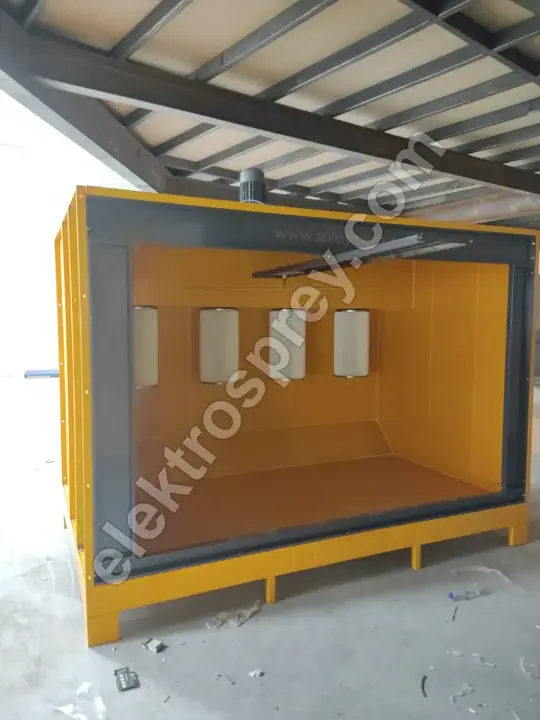 Enlarge
The honest answer to how long a powder coating booth cartridge filter lasts is this: it is decided by differential pressure, not by the calendar. The same cartridge that runs for years in a single-shift shop spraying plain colours will struggle to reach a year on a three-shift line spraying metallics. A properly operated cartridge filter powder coating booth holds its 99.9%+ filtration and 95%+ powder recovery for as long as the pressure drop across the cartridges stays below the manufacturer's threshold. Once that threshold is reached, the filter is finished; until it is reached, a filter is not replaced merely for being old. What follows is how to watch that threshold and what quietly eats filter life in the meantime.
Shops that tie filter changes to a date lose money in both directions. Change too early and you throw away a cartridge that still works. Change too late and you run with a blinded filter: air velocity drops, powder escapes the booth opening, recovery falls and rejected parts start appearing — a far more expensive bill than the cartridge itself.
Why cartridges blind, and what "life" actually means
A cartridge filter holds powder on its surface, not inside the media. In the first hours of operation a thin powder cake forms on that surface, and the cake actually improves filtration. The pulse-jet system fires reverse air pulses at intervals, shakes the cake off, and the powder falls into the hopper and returns to recovery.
Life ends at the point where that shaking is no longer enough. With every cleaning cycle, the finest particles — helped by any moisture and oil in the air — lodge permanently in the pores of the media. Differential pressure stops returning to its original value even right after a pulse. The curve creeps upward. The cartridge still looks intact, there is no hole in it, but it can no longer breathe.
This is why "how many months" has no answer that travels from one plant to another. The answer is in the pressure curve measured on your own booth. How to read that curve and what each trend means is covered separately in booth filter differential pressure monitoring.
What really shortens cartridge life
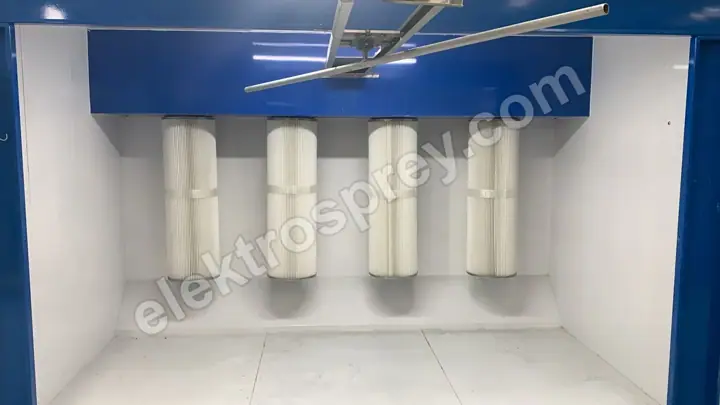
Cartridges usually die from how they are operated, not from age. The most common causes we see on site:
| Cause | Effect on the filter | Countermeasure |
|---|---|---|
| Moisture in the compressed air | Water turns the powder cake to mud that sticks to the media; reverse pulses cannot shake it off | Dryer plus oil separator; daily condensate drain check |
| Oil in the compressed air | An oil film closes the pores permanently — there is no recovery from it | Oil-free air; separator on the compressor line |
| Pulse-jet pressure set too high | The media fatigues from the clean side, splits at the seam, perforates | Set pressure inside the manufacturer's range |
| Pulse firing too frequently | The protective cake never forms; fine powder goes straight into the media | Trigger on differential pressure, not on a timer |
| Booth air velocity too high | Powder strikes the media harder and embeds itself | Keep velocity in the 0.5–0.8 m/s band |
| Very fine or metallic powders | The fine fraction enters the pores and never pulses out | Pre-separating cyclone; media chosen for the powder |
| Aggressive cleaning at colour change | Brushing and blow-down tear the media | Use the booth's own cleaning cycle, without removing cartridges |
| Hopper not emptied on time | A full hopper re-entrains powder and loads the filter twice | Put end-of-shift emptying on the schedule |
The first two lines of that table alone decide roughly half of cartridge life. Compressed air quality is the item most often negotiated away when a booth is bought, and the one that costs the most later; on a line without a dryer, the cartridge budget reminds you of it every year.
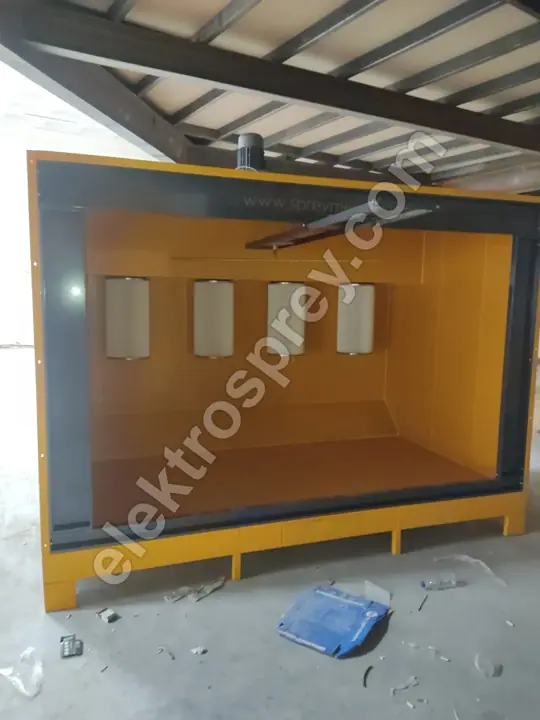
How to tell that replacement time has come
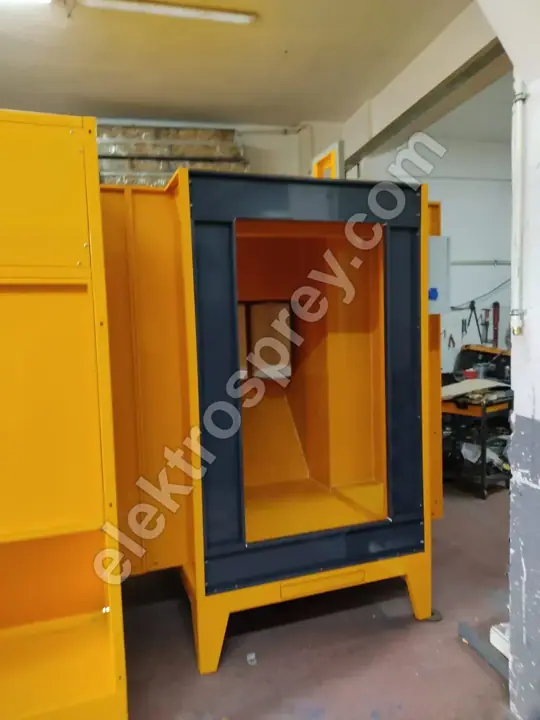
The decision rests on one figure: the differential pressure measured immediately after a cleaning cycle. A dirty filter reads high during operation, and that is normal. What matters is whether the reading returns to its as-new value after the pulse. If it does not, and the gap widens week by week, the cartridge has entered permanent blinding.
The symptom table that works on the shop floor:
| Symptom | What it means | Action |
|---|---|---|
| Pressure drop no longer returns to its original value after cleaning | Permanent blinding has started | Plan the change, order cartridges |
| Pressure drop at the threshold, cleaning cycles firing more often | End of life | Replace the cartridge bank |
| Pressure drop falls, airflow increases | Torn media or a leaking gasket | Stop the booth, inspect cartridges and seals |
| Powder escaping the booth opening | Extraction is insufficient | Check filter, fan and hopper level together |
| Powder traces in the clean-side duct | Cartridge perforated or badly seated | Replace it, clean the seating face |
| Recovery rate has dropped | Weak extraction, or powder not reaching the hopper | Check pressure drop, cyclone and hopper |
| Film thickness drifting with no change in gun settings | Booth air balance disturbed | Measure velocity, then assess the filters |
A falling differential pressure is the most dangerous symptom, and it is usually mistaken for good news. Powder traces on the clean side mean the cartridge has stopped filtering; the escaping powder goes straight into the fan and the exhaust duct, which is an unacceptable risk in an ATEX-classified area.
Building the annual consumables budget
When a booth is purchased, the machine price is discussed and the consumables are not. Yet over ten years the cartridge line item is a serious share of total cost of ownership. The right way to build it:
- Get the cartridge count and type written into the quotation. How many, what dimensions, what media, what mounting — if this is not fixed at order stage, sourcing equivalents years later becomes difficult.
- Decide the antistatic requirement up front. Powder application generates static charge, so conductive and properly earthed cartridges are both a safety and a life question. Deciding late turns the price difference into a surprise.
- Treat the first year as a measurement year. Twelve months of differential pressure records give you the real replacement interval for your plant. Without that record, any budget is guesswork.
- Set a spares policy. Stocking a full bank ties up capital; stocking nothing stops the line. The practical balance is a few spare cartridges held against sudden failures such as perforation.
- Divide the cost by parts, not by years. Expressing cartridge cost per coated part gives you a figure you can actually use when quoting work.
This is one of the operating costs that belongs in the full investment picture, set out in powder coating plant installation cost; the order in which a line is built is covered in our main guide, how to set up a powder coating plant.
Early versus late: which change costs more
Changing early is a visible cost: the price of a cartridge that still had life in it. Changing late is invisible and much larger.
In a booth running with blinded filters the fan draws more current to move the same air, booth velocity falls below the 0.5–0.8 m/s band, and powder starts drifting out of the booth opening. Powder that escapes cannot be recovered; it is a direct loss. At the same time the air balance shifts, so film thickness drifts even with gun settings untouched and the rework rate climbs. The bill for a late change is therefore not the cartridge price at all — it is lost powder, extra electricity and scrapped parts.
The correct policy sits between the two: tie the change to the differential pressure threshold, but place the order as the threshold approaches. Being forced to run on blinded filters while waiting for delivery is the most expensive planning mistake in this subject.
Three jobs skipped during replacement
Replacing cartridges is not only about the cartridges. Use the shutdown for three more jobs:
Gaskets and seating faces. A new cartridge seated on an old, hardened gasket leaks powder to the clean side, and the new filter has been fitted for nothing. Clean the seating face and renew the gasket where needed.
Pulse-jet nozzles and diaphragm valves. A blocked nozzle never cleans the cartridge in front of it, and that cartridge dies far earlier than the rest. When a few positions in the bank blind repeatedly and the others do not, the fault is almost always a valve or a nozzle, not the filter.
Hopper, cyclone and sieve. A restriction in the recovery circuit keeps powder circulating inside the booth and loads the filter a second time. The whole circuit should be inspected during the same stop.
A new bank fitted without these three jobs will last less than the one it replaced. How much access a given booth design gives you for this maintenance is itself part of the purchasing decision, discussed in choosing a powder coating booth.
Frequently asked questions
How long does a cartridge filter last?
It varies by plant, and quoting a single number would be misleading. The determining factors are not running hours but powder type, compressed air quality, pulse-jet settings and colour change frequency. The same booth used single-shift on plain colours and three-shift on metallics will show cartridge lives that differ several times over. The real figure for your plant comes from your first year of differential pressure records.
Can I blow a cartridge out with compressed air and reuse it?
No. Removing a cartridge and blasting it from the outside tears the surface layer of the media; it looks good on the first day and then leaks powder to the clean side. A cartridge is cleaned only by its own pulse-jet system, within the manufacturer's pressure range. Washing is not an option either: a powder coating cartridge that gets wet blinds irreversibly.
If the pressure drop is low, is the filter in good condition?
Not necessarily. Low differential pressure on a new cartridge is normal, but a pressure drop that falls during service is bad news: it means torn media, a leaking gasket or a badly seated cartridge. The booth pulls more air and you assume everything is running well, while powder is passing to the clean side. If there are powder traces in the clean-side duct, the booth should be stopped immediately.
Are cartridges replaced individually or as a full set?
Single failures such as perforation are replaced individually. End-of-life blinding is handled by changing the whole bank together. The reason is simple: a new cartridge offers far less resistance than the blinded ones beside it, so it takes most of the airflow, loads quickly, and a mixed bank never balances.
Are antistatic cartridges necessary?
Powder application runs at high voltage and charged powder builds static on the filter surface. In a booth classified as a potentially explosive atmosphere, conductive media and correct earthing are inseparable from the ATEX approach. Treat it as a clause in the booth specification, not as an option to be added later.
Does filter condition affect the powder recovery rate?
Directly. The 95%+ recovery figure depends on holding the air balance inside the booth. A blinded filter weakens extraction, powder escapes the booth opening, and escaped powder cannot be recovered. When recovery falls, the first place to look is the filter differential pressure; the second is the cyclone and hopper.
Summary
Cartridge life is managed by measurement, not by the calendar. The single figure to watch is whether differential pressure returns to its original value after a cleaning cycle; when it stops returning, permanent blinding has begun. The real killers are moisture and oil in the compressed air, wrong pulse-jet settings, excessive booth velocity and hoppers that are not emptied on time. When the change is left too late, the bill arrives as lost powder, higher energy consumption and reworked parts rather than as the price of a cartridge. Use the shutdown to service gaskets, nozzles and the recovery circuit as well. The booths we build are supplied under CE / ATEX scope with a 2-year manufacturer's warranty, and the cartridge bank is stated by type and quantity in the quotation.
Send us your booth's cartridge type, quantity and your shift pattern — we will set out a differential pressure monitoring plan and an annual consumables budget with you.