
Road or Sea Freight for a Paint Line? The Decision Table
When exporting a powder coating plant, the truck-or-container question is answered by body dimensions, delivery urgency and the number of handling points, not by the destination country. This article compares both modes on size, transit time, handling, damage risk, customs and packing, and gives the order in which the decision is made.
 Enlarge
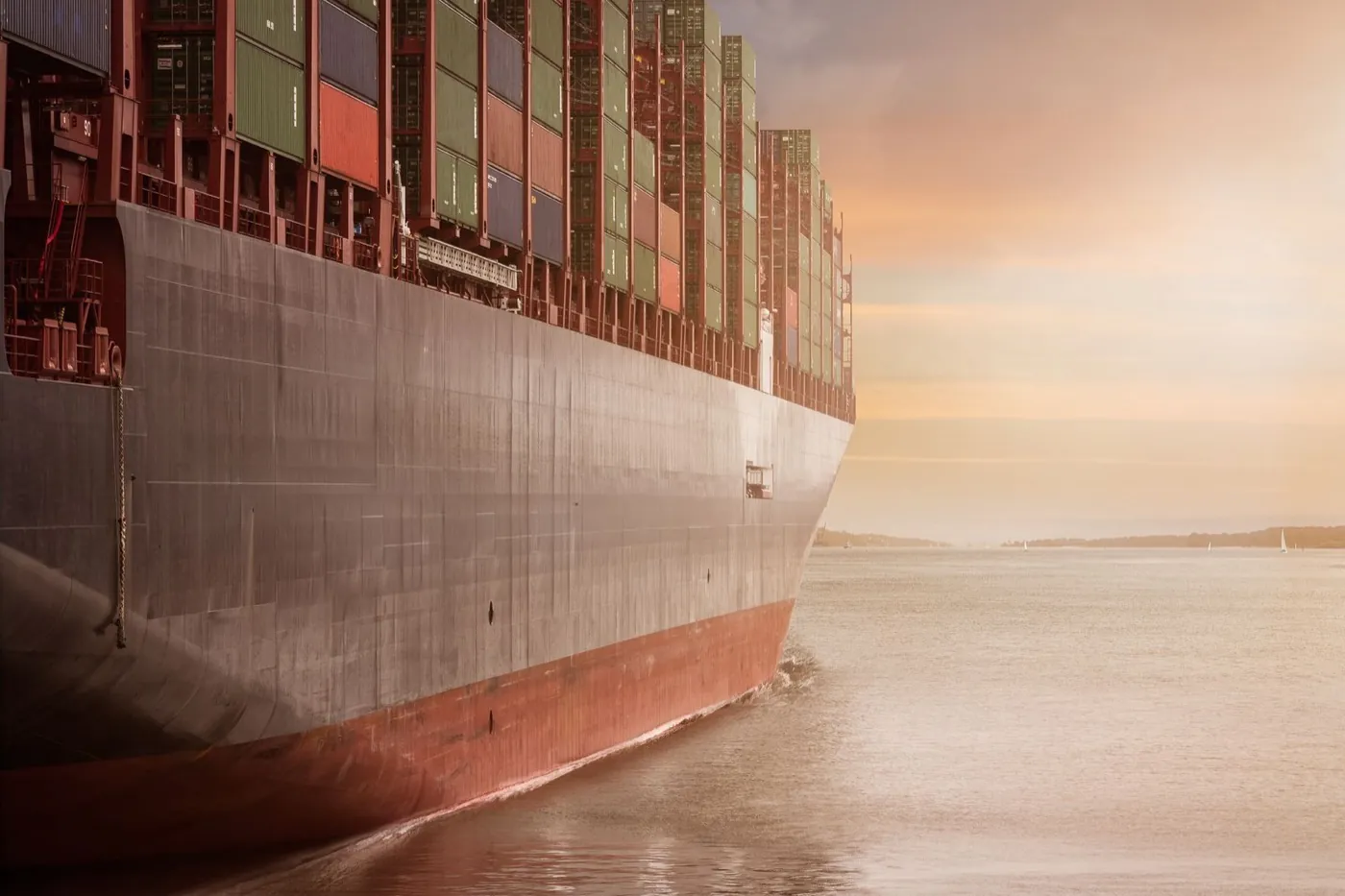
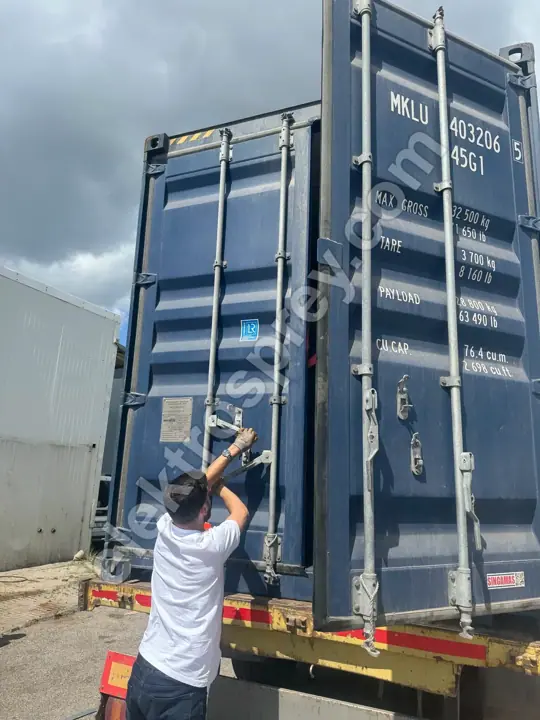
In machinery export, the road-or-sea question is settled by the dimensions of the largest single body in the plant, not by the destination country. A coating plant is not one machine; it is a multi-item shipment of oven panels, booth bodies, pretreatment tanks, 3–7 stage pretreatment equipment and conveyor sections. If the largest of those items fits inside the internal envelope of a standard container (roughly 12 m long, a width band around 2.3 m, a height band of 2.6–2.7 m), sea freight is almost always the right mode. If it does not fit, the real choice is no longer sea versus road but out-of-gauge transport versus splitting the body in manufacturing — and that call belongs on the design table, not the shipping desk.
This is why we discuss the mode at quotation stage. If an oven chamber length or a booth body width exceeds the container envelope by a few centimetres, adding a flanged split point lowers both the landed cost and the site assembly time. The longer the shipping decision waits, the fewer options remain.
The six variables that decide the mode
The table below carries only the headings that actually change decisions on site. Cost lines are deliberately absent: freight rates move with route, season and equipment availability, and are confirmed with the forwarder at quotation time.
| Criterion | Road (truck) | Sea (container) |
|---|---|---|
| Loading envelope | Roughly 13.5 m long, 2.4 m wide, 2.6–2.7 m height band | 40 ft high cube: roughly 12 m long, 2.3 m wide, 2.6–2.7 m height band |
| Out-of-gauge | Possible with permits, rules differ by country, route approval required | Possible on flat rack / open top, port handling mandatory |
| Door to door | Yes, single vehicle, no transfer | No, at least works–port–port–site chain |
| Handling points | 1 loading + 1 unloading | 4 or more contact points |
| Delivery time | Days for neighbouring and near markets | Weeks in the near basin, several weeks or longer deep sea |
| Damage risk | Vibration and road shock dominate | Handling impact, moisture and salt air dominate |
Body size: the dimension picks the mode, not preference
A tunnel type powder coating plant is built in the 500–5,000 parts/hour capacity band and is manufactured to the customer's largest part; there is no catalogue size. So there is no general answer to "how many containers does this plant take". The shipping plan is drawn from the item list once the manufacturing drawings are released.
In practice there are three size classes:
- In-container class. Oven panels, booth sheet bodies, filter cartridge groups, the control panel, conveyor chain and hanger elements. These travel knocked down and palletised; a standard container is enough.
- Borderline class. Tank bodies, welded oven modules, long conveyor beams. Here the split point is decided by design: a flanged joint removes the entire out-of-gauge chain.
- Out-of-gauge class. Bodies that cannot be split. At this point the subject is no longer a mode comparison but special equipment planning; we covered its conditions separately in when out-of-gauge cargo needs a flat rack.
On aluminium profile lines the product sets the dimension: an aluminium U type powder coating plant handling 3–7 m profiles needs long hangers and long oven modules. A 7 m module fits no standard container; it is either split or planned as open top. That decision is made together with the internal layout that keeps colour change under 20 minutes — a module split at the wrong point for the sake of shipping produces thermal bridges and leakage on site.
Delivery urgency: if you are buying time, buy road
The one genuine advantage of road transport is that it runs door to door and waits for no transfer. When the commissioning date is fixed, when the production stoppage window is tied to a tight calendar, or when the new line replaces an operating one, the time item outweighs the cost item.
Do not give exact transit days, and do not let anyone give them to you. Transit time depends on distance, border crossing load, vessel rotation, the number of transhipment ports and the customs channel. The right approach is to ask for the worst case in writing at quotation: what happens to the commissioning team's calendar if there is a delay, and against what date does the assembly crew book its tickets.
| Situation | Suitable mode | Reason |
|---|---|---|
| Near market, tight commissioning window | Road | No transfer, one responsible carrier |
| Distant market, flexible calendar | Sea | Volume and weight favour sea |
| Mixed shipment with critical items | Both together | Panel and sensitive equipment by road, sheet bodies by sea |
| Inland delivery, landlocked country | Sea + road | The post-port leg is planned separately |
| Single out-of-gauge body | Project cargo | Route survey and special equipment mandatory |
| Arrival timed with the commissioning crew | Mostly road | Crew and cargo calendars can be matched |
Handling points and damage risk
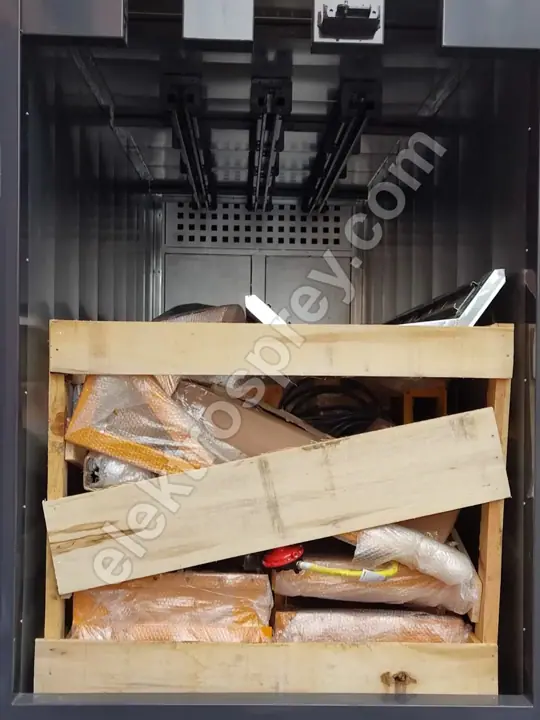
Most damage happens not on the road but during handling. On road transport the cargo is loaded once and unloaded once. On sea freight there are at least four contact points between works, port of loading, vessel, port of discharge and site; with a transhipment port there are more. Every contact point means a forklift fork, a sling and a crane operator.
That is why shipping packaging is designed together with the mode:
- Crates and pallets: centre of gravity and lifting points are marked on the crate. An unmarked crate gets picked up at the wrong place.
- Moisture management: condensation inside containers is real. Control panels, PID control groups, motors and bearings travel with desiccant in separate sealed packaging.
- Surface protection: on galvanised inner sheets and painted outer panels a scratch is the first defect anyone sees on site; protective film and spacer blocks are standard.
- Lashing: vibration dominates on the road, sliding at sea; the lashing scheme is not the same for both.
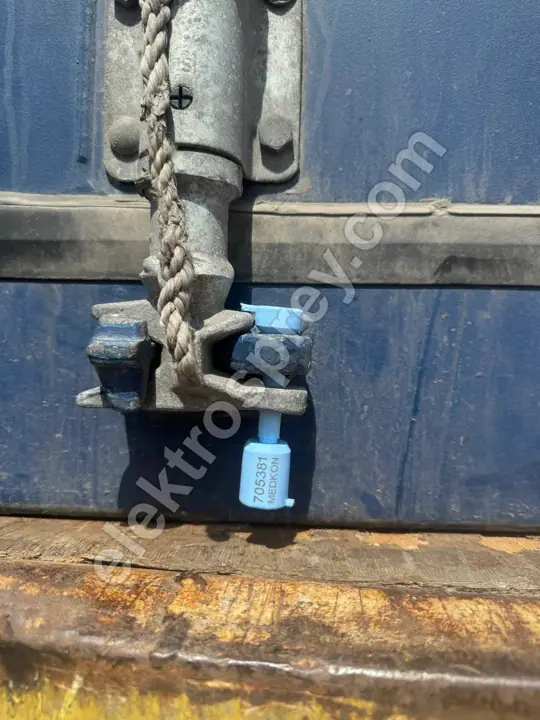
When damage occurs the process turns into paperwork: packing list, loading photographs, container seal number and the damage survey taken at arrival. We explained step by step how that chain is built and what a claim depends on in machinery transport insurance and the damage process. Every line we build is delivered with a 2 year manufacturer's warranty; but the warranty covers manufacturing defects and insurance covers transport damage — that boundary has to be written clearly into the contract.
Customs, packing and paperwork
The two modes do not carry the same document load. On the road the vehicle enters and leaves one customs channel; at sea the container brings a bill of lading, port terminal operations and the release chain at arrival. Wooden packaging needs a heat treatment stamp in both modes. If you are shipping a gas fired oven — for example an overhead pallet oven in the 50,000–500,000 kcal/h band — the CE and EN 1020 documents for the burner and gas train are prepared with the technical file in the format the destination country requires.
We collected the order in which these items are prepared, and how they are matched to commissioning, in powder coating plant transport and shipping.
Frequently asked questions
How many containers does a coating plant fill?
Giving a general figure would be wrong; because the plant is built to the customer's largest part, the volume changes from project to project. The correct method is to calculate volume and weight from the item list once manufacturing drawings are released, then derive the container count. Any container count given at quotation stage is an estimate and must be written into the contract as an estimate.
Truck or container, which carries less damage risk?
Because it involves fewer handling points, road transport typically has fewer contact points. In exchange, vibration and road shock are continuous on the road. The rule is this: handling governs sensitive and electrical items, vibration governs heavy sheet bodies. A mixed shipment gives the most balanced result on most projects.
What do you do with a body that exceeds the container envelope by a few centimetres?
That alone is not sufficient reason to move to out-of-gauge transport. You go back to the design first: add a flanged split point, make the leg group removable, or ship the door and stack connection separately. Special equipment and route approval come up only if the body genuinely cannot be split.
How does the shipping mode affect the commissioning schedule?
Directly. Assembling a line whose conveyor will be set in the 1–6 m/min band depends on the arrival sequence of the parts. If the main body arrives late, the crew waits idle. That is why containers are loaded in assembly order and the packing list is matched to the assembly plan; if the mode choice breaks that sequence, it is reconsidered.
When does it make sense to use both modes together?
When low volume, high criticality items such as the control panel, gun groups, PID control equipment and spare parts go by the faster mode while bulky sheet and body items go by sea, both the calendar and the risk are balanced. The only condition is that the two shipments are delivered to the same store keeper at arrival and that the packing lists share one numbering scheme.
Summary
The order of decision is clear: first body size (does it fit the container envelope), then delivery urgency, then the number of handling points and damage risk, and last the customs and packing load. If the size fits and the calendar is flexible, sea; if the calendar is tight and the distance short, road; if there are critical items, both. Discuss price at the end of that order — because the cost of a body that arrives by the wrong mode and gets repaired on site is larger than the difference between the two modes.
Share your item list and delivery address — we will work out together, over the manufacturing drawings, which item should travel by which mode.
For plants in the UK, North America and beyond
Where your line is installed shapes the paperwork, the power supply and the rules behind the choices described above.
- For the UK, goods of Turkish origin move under the Türkiye–UK free trade agreement with an EUR.1 certificate or an origin declaration. For other destinations, the origin paperwork depends on that country's trade agreements, so check it with your importer early.
- Gas burners and fuel trains are commonly built to EN 746-2 and EN 676. In North America, expect UL or CSA listed components and a review by the local authority or gas utility; commissioning usually needs the gas supplier's sign-off.
- For the UK, confirm with your importer whether UKCA or CE marking is expected. In the US and Canada, plan for UL or CSA requirements on the electrical side, and check any local documentation rules before shipment.
- North America runs at 60 Hz, and 480 V is common in industrial plants, so motors, fans and controls have to be specified for that supply from the start. Confirm the voltage and frequency on site before the line is designed.
Products mentioned: Aluminum Profile U-Type Powder Coating System · Tunnel Type Electrostatic Powder Coating System · Overhead Pallet Powder Coating Oven (Gas)
When you ask for a quote, tell us your country, supply voltage and frequency — get in touch.