
Out of Gauge (OOG) or Standard Container? How to Decide on Flat Rack
When an oven shell or booth width exceeds the internal dimensions of a standard container, the decision narrows to three options: flat rack, open top, or splitting the body into modules that fit a standard box. This article covers the threshold dimensions, which direction each option pushes cost, and the order in which the decision must be made.
 Enlarge
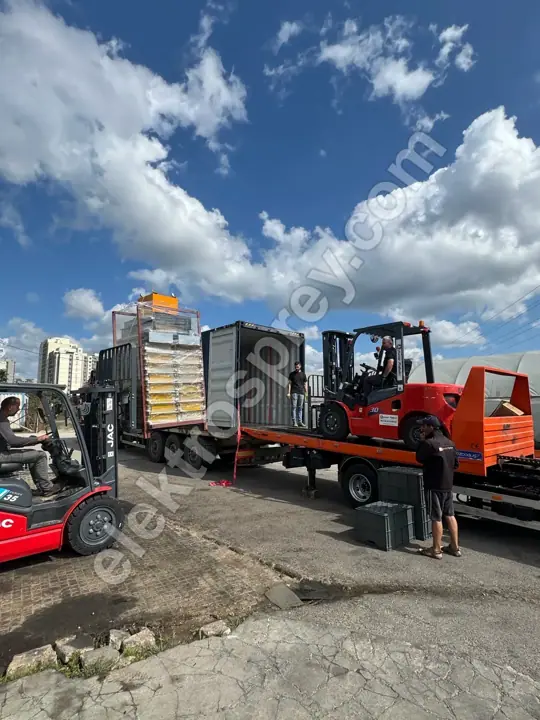
The moment a piece of equipment passes roughly 2.30 m in width or 2.35 m in height, it will no longer clear the doors of a standard dry container; from that point on an out of gauge load travels on a flat rack or in an open top, or it is split into modules that fit a standard box. Width alone does not decide it: internal width, door opening and loading height are checked together, and whichever one is exceeded determines the solution. In practice the large bodies of a coating line — oven shell, booth, pretreatment tank — rarely fit in one piece. The decision to make them fit is taken during manufacturing, when the panel split lines are drawn. By the time the question reaches the freight forwarder, it has already become expensive.
Out of gauge (OOG) does not mean "cannot be shipped". It means the cargo leaves the standard stowage grid: it needs special handling and is rated on the volume it blocks rather than on the box itself. That is why an out of gauge shipment pushes cost clearly upward — but splitting the body and reassembling it on site carries its own erection and risk cost. The right decision counts both sides.
Where is the threshold? Standard container internal dimensions
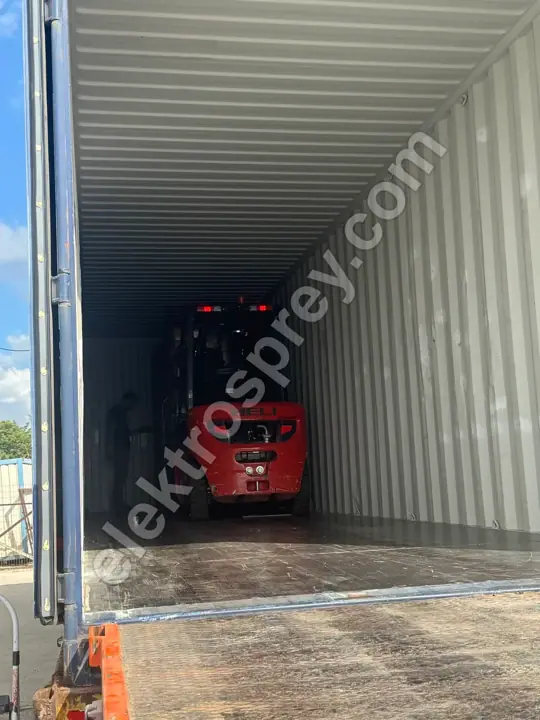
Internal dimensions are fixed industry knowledge and they set the decision threshold. The values below are typical build dimensions and can vary by a few centimetres with container age and maker, so for critical pieces ask the carrier for the actual dimensions of that box in writing.
| Container type | Internal length | Internal width | Internal height | Door opening (W × H) |
|---|---|---|---|---|
| 20' DV | ~5.90 m | ~2.35 m | ~2.39 m | ~2.34 × 2.28 m |
| 40' DV | ~12.03 m | ~2.35 m | ~2.39 m | ~2.34 × 2.28 m |
| 40' HC | ~12.03 m | ~2.35 m | ~2.69 m | ~2.34 × 2.58 m |
| 40' Open Top | ~12.02 m | ~2.35 m | ~2.35 m + overheight | roof opening ~2.20 × 11.50 m |
| 40' Flat Rack | ~12.10 m platform | ~2.40 m platform | no upper limit, low deck height | no doors, top/side loading |
The practical thresholds follow directly. Below 2.30 m of width the job belongs in a closed container. The 2.30–2.40 m band is the grey zone: the piece clears the door but leaves no room for lashing and dunnage. Above 2.40 m you are in flat rack territory. Height is a sharper split: a 40' HC handles up to roughly 2.55 m comfortably, and anything above that means open top or flat rack.
Three options and the direction each pushes cost
| Option | When it is right | Cost driver | Direction |
|---|---|---|---|
| Standard DV/HC (split) | Body can be divided into bolted modules | Extra panel fabrication, site erection labour, time | Freight down, erection up |
| 40' HC | Height between 2.39 and 2.55 m, width within limits | Limited box premium | Slightly up |
| Open Top | Height exceeded, width fine, crane loading from above required | Overheight, tarpaulin customs handling | Moderately up |
| Flat Rack | Width or height clearly exceeded | Neighbouring slots blocked, special handling, weather exposure | Clearly up |
| Break bulk / conventional | Single piece too heavy or too large, dedicated vessel needed | Port handling, sailing frequency, waiting time | High and variable |
| Road (permit load) | Destination in Europe/Caucasus, no sea leg needed | Oversize permit, escort, route restrictions | Very distance sensitive |
The real lesson in this table is that a flat rack is not a bad option because it costs more. What is bad is discovering at the last minute that a body inevitably needs one, and then trying to cut and re-weld that body on site. A split decided at design stage arrives with bolted flanges, gaskets and an assembly manual; decided afterwards, it means cutting a welded shell — and insulation integrity, sheet flatness and the warranty all become negotiable.
Which equipment is genuinely out of gauge?
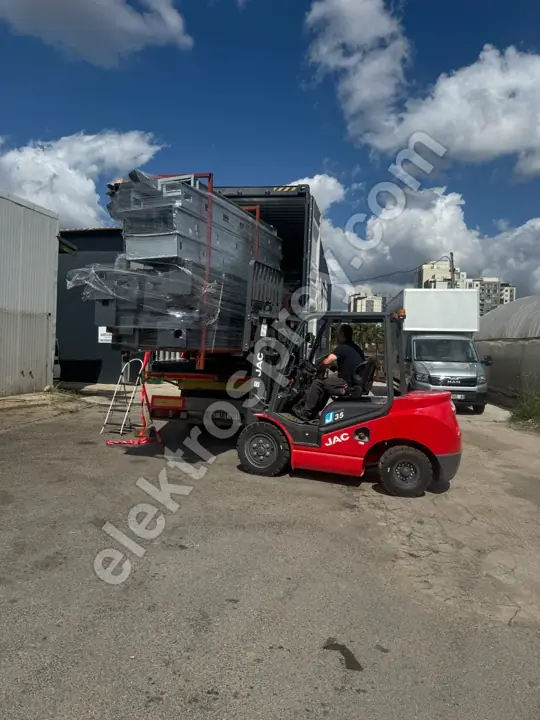
Not everything on a coating line is oversized. In practice the split is:
- Conveyor, hangers, rails, electrical panels, pumps: almost always fit a standard container.
- Filtered powder booth: panel built and shipped knocked down; being out of gauge is the exception. A filtered powder coating booth is dimensioned around the customer's largest part, so booth width is a direct derivative of part size.
- Box oven shell: can ship as insulated panel modules. On the box type electric oven side the question is usually "how many modules", not "flat rack or not".
- Pretreatment tanks: the item that most often goes out of gauge. A tank has to be welded and leak tight, and splitting it is not always possible. On dip lines tank length follows profile length, and a plant running 3–7 m profiles may well end up with a one-piece tank.
- Tunnel oven shell: length is not the problem, since it is modular anyway; the problem is cross section. Tunnel cross section grows with hanger height, and past a certain point it cannot travel in one piece.
On complete lines such as a tunnel type powder coating plant the shipment is usually mixed: most bodies in standard containers, one or two items on a flat rack. That mix is often the cheapest answer — piling everything onto flat racks and force-splitting everything are both wrong.
In what order should the decision be made?
- Establish the real dimensions. Take the shell outer dimensions from the fabrication drawing, then add stiffeners and packing allowance. Packing is the most forgotten item; crating adds a few centimetres in each direction and pushes a borderline piece out of gauge.
- Ask whether it can be split. Can this shell be divided into flanged modules, and does splitting cost performance? For oven panels the answer is usually yes; for a pretreatment tank, usually no.
- Add the destination. Does the discharge port handle out of gauge cargo, and does the inland road leg need an oversize permit? There are routes where the sea leg is easy and the road leg impossible; road or sea freight for a coating line treats that leg separately.
- Put the two scenarios side by side. The split scenario costs extra fabrication plus site erection time; the out of gauge scenario costs extra freight plus handling plus weather risk. The decision is the comparison of those two totals, not of freight alone.
- Lock the stowage plan. Once decided, which piece goes into which box becomes a plan; the method is set out step by step in the container stowage plan for a powder coating line.
Frequently asked questions
If the oven shell is 2.50 m wide, is a flat rack mandatory?
No — check divisibility first. A 2.50 m wide box oven shell whose side panels can ship separately and be bolted together on site fits a standard 40' HC. A flat rack becomes mandatory only when the body cannot be divided: a welded tank, a one-piece frame, a monobloc booth. The right question is not "will it fit", but "can it be split, and what do I lose".
What is the difference between open top and flat rack?
An open top is a normal container with a tarpaulin roof: width is still limited to about 2.35 m, it only gives flexibility in height and allows loading by crane from above. A flat rack is a platform with no side walls: both width and height limits disappear, but the cargo is fully exposed, and lashing engineering plus weather protection are your responsibility. If only height is exceeded, an open top is enough and cheaper; if width is exceeded, a flat rack is the only route.
Does splitting and reassembling on site reduce oven performance?
Not when it is designed properly. Insulation continuity at panel joints is maintained with gaskets and an inner cladding sheet; a shell pre-assembled in the factory, numbered and dismantled will meet the ±3 °C uniformity target when erected in the same sequence. What is risky is a shell cut afterwards, with no joint detail designed for it — which is why split lines belong on the fabrication drawing.
How much do packing and crating affect the dimensions?
For borderline pieces, enough to change the decision. Dunnage, battens, corner protection and moisture barrier add a few centimetres in every direction, and the height of the pallet or skid under the load is deducted from net internal height. A 2.55 m tall shell on a 15 cm skid exceeds the internal height of a 40' HC. Dimensional checks are always made on the packed dimensions.
How are insurance and damage risk managed on out of gauge shipments?
On a flat rack the cargo travels exposed, so salt, moisture and impact risk are higher than in a closed box. Three measures work: wrap the body in VCI film plus shrink, ship the electrical and control group in a separate closed container, and photograph the lashing plan before loading. Never send electronics and PID control panels on an open platform.
Summary
The decision chain is short: real packed dimensions → divisibility → destination constraints → total cost of the two scenarios. Below 2.30 m in width the job stays in a standard container; above 2.40 m you are discussing flat rack; if only height is exceeded, an open top or a 40' HC is usually enough. The most expensive mistake is deciding in the week of shipment — with split lines drawn on the fabrication drawing, out of gauge shipping proves unnecessary on most projects. Planning the whole shipment? The transport and shipping guide for a powder coating plant is the right starting point; every line we build is delivered with a 2 year manufacturer warranty.
Send us the dimensions of your largest piece and your destination port — we will go through the fabrication drawing with you and separate what fits a standard container from what genuinely needs a flat rack.