
How Do You Know an Oven's Insulation Is Worn? Heat Leak Survey
An oven with tired insulation still holds its setpoint; it simply burns more energy doing so, which is why the leak goes unnoticed for years. This article covers mapping the outer shell with a thermal camera, the acceptable surface temperature threshold, and how to tell a gasket finding from a panel finding.
 Enlarge
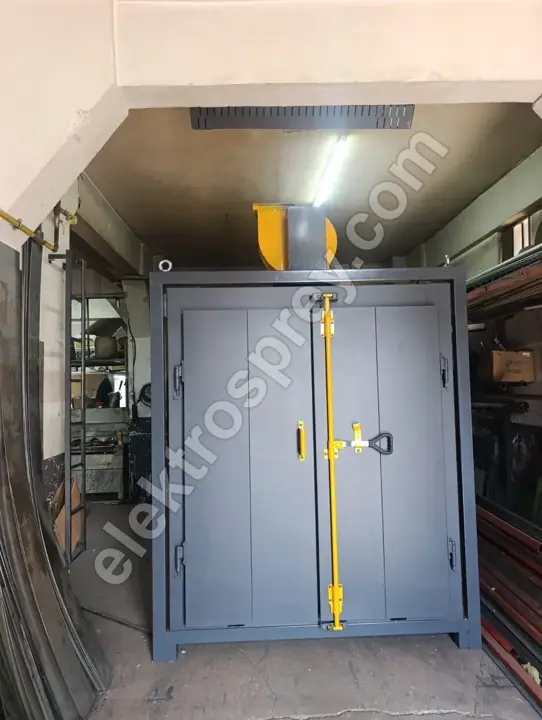
A powder coating oven heat leak and insulation check is a thermal map of the outer shell, taken once the oven has settled into its working regime, and the practical acceptance band is narrow: on a soundly insulated oven the outer panel surface stabilises at roughly 15–20 °C above ambient. Anything above that band is a finding. The 10 cm rock wool insulation in our box type electric ovens holds that band comfortably while panel gaskets are intact and the door is correctly adjusted; when the band is exceeded, the culprit is usually not the insulating material but a worn gasket, a drifted door adjustment, or an opened panel seam. Run the survey every six months, always from the same points. A single reading tells you nothing; a comparable record tells you everything.
This is the maintenance side of the subject. Choosing insulation thickness when you buy the oven, and what thickness does to heat loss and warm-up time, is covered in oven insulation thickness and heat loss. The question here is different: is the oven you already own still delivering what that thickness promised?
The silent cost of worn insulation
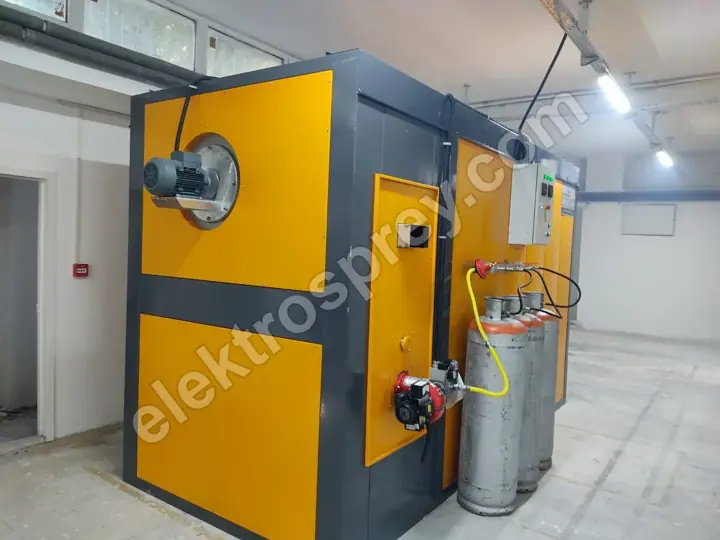
Insulation loss does not show up as a quality defect. The oven keeps holding its setpoint, because the control system closes the gap by running the elements or the burner longer. Parts cure, colour holds, nobody complains. The bill accumulates quietly.
Wear arrives in three forms, each calling for a different response:
- Rock wool settling: years of vibration and thermal cycling slump the wool inside the panel. The upper half thins out, the lower half compacts. On camera this reads as a broad, diffuse warm area.
- Panel and door gasket crushing: silicone or ceramic fibre gasket takes a permanent set from thermal cycling and door slamming. This produces a linear leak — a thin hot stripe.
- Door, curtain and labyrinth misadjustment: a dropped hinge, a drifted latch, or a worn entry/exit curtain on tunnel ovens. The insulating material is sound; there is simply an opening.
The first warning sign is usually a longer warm-up time. If the 35–45 minute warm-up measured at commissioning on an overhead monorail gas oven has stretched noticeably, something has changed on the burner/fan side or in the insulation. The second sign is degraded temperature uniformity: hangers near the door or near the leaking wall run consistently cold. How to measure that distinction is set out in oven temperature uniformity.
The survey itself: mapping the shell with a thermal camera
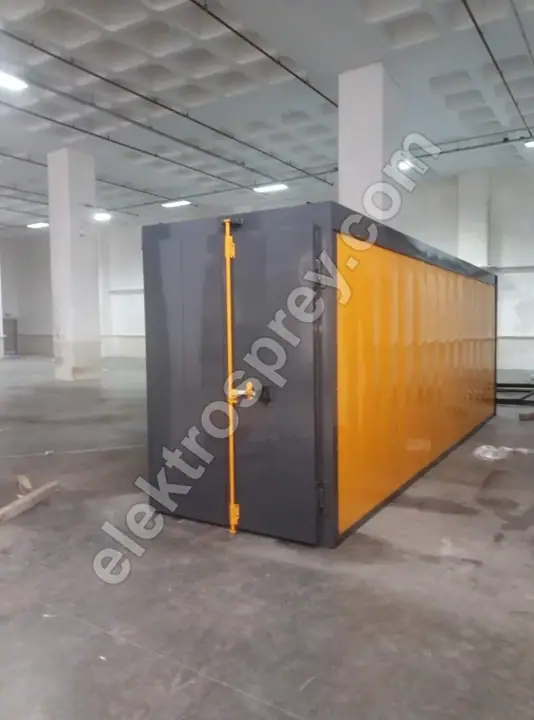
Survey the oven after it has settled into its regime. Readings on a cold or still-heating oven mislead, because the panel steel has not reached equilibrium. Practical rule: at setpoint for at least an hour, doors closed, ideally under normal production load.
Do not skip the camera's emissivity setting. Around 0.9 is realistic on painted matt steel; bright galvanised or stainless surfaces fool the camera badly. To read a shiny area, stick matt tape on the spot and read through the tape. Shoot perpendicular to the oven from 1.5–3 m, and repeat any reading taken in moving air, such as directly in front of a door.
| Survey point | What to look for | Typical pattern | First action |
|---|---|---|---|
| Door frame and gasket line | Hot stripe around the perimeter | Linear, sharply bounded | Gasket and door adjustment |
| Hinge and latch side | Concentration in one corner | Point-like | Hinge/latch adjustment |
| Panel joint seams | Thin line along the seam | Linear | Reseal the seam |
| Middle of the panel body | Broad, diffuse warm area | Area | Open panel, inspect wool |
| Roof and ceiling surface | The most frequently skipped area | Area, broad | Check for wool settling |
| Floor-to-wall junction | Hot band along the floor line | Linear | Base profile and gasket |
| Fan housing, duct penetrations | Ring around the flange | Point/ring | Flange gasket |
| Conveyor entry–exit slot | Hot air escaping the opening | Area, unstable | Curtain/labyrinth adjustment |
Shoot the same points from the same angle with the same emissivity setting every time. Taking the first survey in the commissioning week and filing it as your baseline makes every later year readable. Without a camera, a contact surface thermometer gives spot readings; spot readings confirm a suspicion but never produce a map.
Thresholds: what is normal, what is a finding
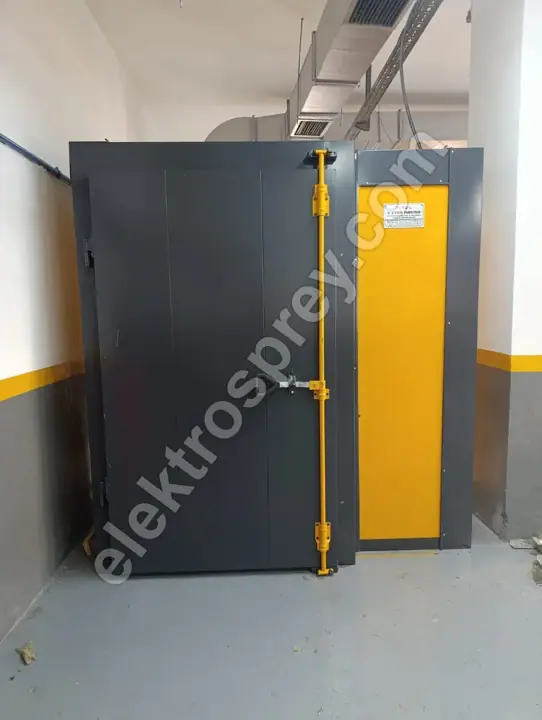
Locking onto one absolute number is a mistake, because ambient and working temperatures vary from plant to plant. Read it through two questions: how far above ambient, and how far above the neighbouring area?
| Reading | What it means | Decision |
|---|---|---|
| Below ambient + 15 °C, even surface | Insulation performing as expected | Record it, no action |
| Ambient + 15–20 °C, evenly distributed | Borderline band | Re-measure in 6 months, watch the trend |
| Over 10 °C above the neighbouring area, linear | Gasket / seam leak | Gasket replacement, reseal seam |
| Over 10 °C above the neighbouring area, area-wide | Insulation settling | Open panel, inspect wool |
| Sharp jump at a single point | Thermal bridge (profile, hinge, rail) | Design/detail review |
| Air escaping from an opening | Door/curtain misadjustment | Mechanical adjustment; insulation is sound |
The pattern matters more than the number. Linear findings are almost always gasket, seam or adjustment issues, and they are cheap. Area-wide findings point at the insulating material and require opening a panel. To put a figure on the leak, use the method in powder coating oven energy consumption: multiply the escaping heat by hourly consumption and annual running hours, then set the gasket or panel cost against it. On the gasket side the payback is usually too short to debate.
Gasket or panel? Drawing the line
You can confirm a door gasket suspicion without a camera. With the oven cold, trap a thin paper strip in the seal, close the door, then pull. If it slides out with no drag, the gasket is no longer compressing there. Repeat at a minimum of eight points around the perimeter; the corner opposite the hinge usually goes slack first. If the finding clusters in one region, correct the door adjustment first — replace the gasket and leave the adjustment alone, and the new gasket is crushed just as quickly.
The panel decision is heavier and is never made without opening the panel. If the wool is slumped to the bottom edge, crumbling, or damp, that panel's insulation is renewed. Moisture comes from washing down a cold oven or from a roof leak; damp rock wool loses its insulating value and corrodes the steel from the inside. Local settling in one panel means renewing that panel; recurring across several panels, the conversation is no longer spot repair but shell overhaul.
| Finding | Likely cause | Response | Workload class |
|---|---|---|---|
| Linear heat around the door | Gasket crushed, elasticity gone | Gasket replacement + door adjustment | Between shifts |
| Hot spot in one corner | Dropped hinge, latch adjustment | Mechanical adjustment | Hours |
| Hot line along a seam | Seam opened by thermal expansion | Reseal | Hours |
| Broad warm area, lower half of panel | Rock wool settling | Open panel, renew wool | Planned downtime |
| Patchy/mottled pattern on the panel | Wool has absorbed moisture | Replace wool + find the source | Planned downtime |
| Unstable hot flow at entry/exit mouth | Curtain/labyrinth worn | Renew curtain | Hours |
Thermal bridges are their own category: at structural profiles, hinge bodies and conveyor hanger slots, metal bypasses the insulation. Maintenance does not close these; design reduces them. That is why the entry and exit mouths of overhead monorail ovens are built as labyrinths. On both the overhead monorail oven and the box type electric oven shells we manufacture, this detail is re-dimensioned around the customer's largest part; there is no catalogue size.
Maintenance intervals and record keeping
| Interval | Task | Who does it | What gets recorded |
|---|---|---|---|
| Every shift | Visual check of door closure and curtain condition | Operator | Note any anomaly |
| Monthly | Door gasket paper test, hinge/latch adjustment | Maintenance | Test points and result |
| Every 6 months | Thermal camera survey from fixed points | Maintenance | Images + ambient temperature |
| Annually | Empty-oven warm-up time test, stack/flange check | Maintenance | Time (min), deviation from baseline |
| Annually | Sample panel opened, wool inspected | Maintenance | Panel no., wool condition |
For plants without measuring equipment, the warm-up test is the cheapest early warning there is: record how long a cold, empty oven takes to reach setpoint, under identical conditions, once a year. If that time stretches over the years, a loss is accumulating in the insulation, the gaskets or the heating side.
Once the leaks are closed, the next step follows: part of the heat leaving the stack and the cooling zone can be recovered to feed pretreatment tanks or the drying oven. Doing that before closing the leaks is fitting a pump to a leaking bucket. For the sequence, see heat recovery opportunities from the oven.
Frequently asked questions
What surface temperature should the oven shell be?
Look at the difference rather than an absolute figure: a soundly insulated shell stabilises around 15–20 °C above ambient, evenly distributed. If the whole surface sits above that band, the insulation has aged generally; if only certain spots exceed it, the problem is local — a gasket, a seam or an adjustment. Operator safety adds a separate acceptance criterion for surfaces that can be touched.
Can insulation loss be detected without a thermal camera?
Partly. Three cheap indicators: the empty oven's warm-up time lengthening over the years, the paper strip test showing slack, and the working area around the oven becoming noticeably warm. These tell you a leak exists, not where it is. Locating it needs a map, and renting a camera costs less than needlessly stripping one panel.
How often should the door gasket be replaced?
Condition beats calendar. Replace it when the monthly paper test shows slack, or when the survey shows a linear hot band around the door. On box type ovens with many door openings per day, the gasket wears far faster than the curtains on a tunnel oven. If the door adjustment is not corrected during replacement, the new gasket soon ends up in the same state.
Does a longer warm-up time always mean an insulation problem?
No, and you should not strip a panel before drawing that distinction. The same symptom comes from burner efficiency and air-fuel adjustment on a gas oven, aged elements or a dropped phase on an electric one, and on both from a dirty circulation fan impeller or a slack belt. The order is: verify the heating and fan side first, then survey the shell. If heating is sound and the shell is cool, the problem is uniformity distribution, not insulation.
Is it more sensible to renew the insulation or replace the oven?
If the shell steel is sound, the control system works and capacity still suffices, renewing the insulation is almost always right; it is a small line item next to a new oven. Replacement comes onto the agenda for other reasons: insufficient capacity, growing part dimensions, uniformity that can no longer be held because the control side has aged, or widespread shell corrosion. The decision is driven not by "is the insulation bad" but by "will this oven cover the next five years of work".
Summary
Insulation loss shows up as a bill, not as a defect, so it is never found unless it is looked for. The method is fixed: let the oven settle, map the shell from the same points every time, and read both the ambient + 15–20 °C band and the difference against the neighbouring area. Linear findings mean gasket, seam and adjustment — cheap, quickly closed. Area-wide findings mean settled rock wool — panel opening and planned downtime. Decide on the pattern, not on a single number. Repeat and record every six months; the real information is in the trend across years, not in one measurement. Every oven we build is delivered with a 2 year manufacturer's warranty.
Send us your oven's thermal survey images and warm-up time records, and we will work out together whether the finding sits on the gasket side or the panel side.