
Is Final Rinse Passivation Necessary? The Chrome-Free Sealer Decision
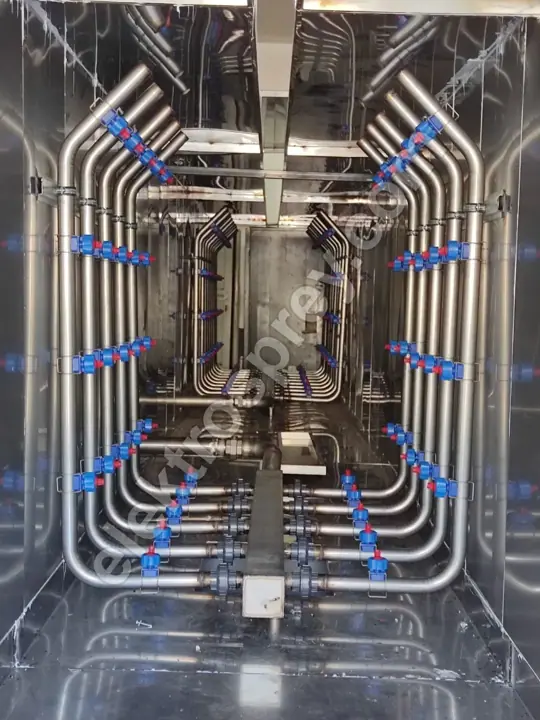
Passivation is the last wet stage laid over the conversion coating; it slows under-film corrosion and stabilises adhesion, but it also means one more tank, one more pump and one more chemical on the line. This article explains where passivation becomes mandatory, what chrome-free alternatives bring, and how adding a stage lands on tunnel length.
 Enlarge
Passivation as a final rinse is not necessary for every powder coating job, but the moment you sign a quality commitment the argument is over. The practical rule: pretreatment is built in a 3–7 stage band; for indoor furniture, shelving and panels that live in dry air, lines sitting at the bottom of that band usually skip passivation, while architectural profile, agricultural and construction machinery, appliance bodies and defence parts — anything carrying a salt spray figure or an ISO 12944 class — move up the band precisely because of it. So the question is not "is it good", it is "what did you promise". Once you have promised it, you have accepted one more tank, one more pump, one more dosing unit and additional water consumption.
We name no chemical brands here and we give you no conductivity limit. The acceptable conductivity of your final rinse water is written in the data sheet of the chemistry you use and must be obtained in writing from your supplier; move the same line to a different chemical family and that limit moves too. Our territory is the line itself: how many stages, how many tanks, how much water, which materials, how many metres of tunnel.
What the passivation stage does and does not do
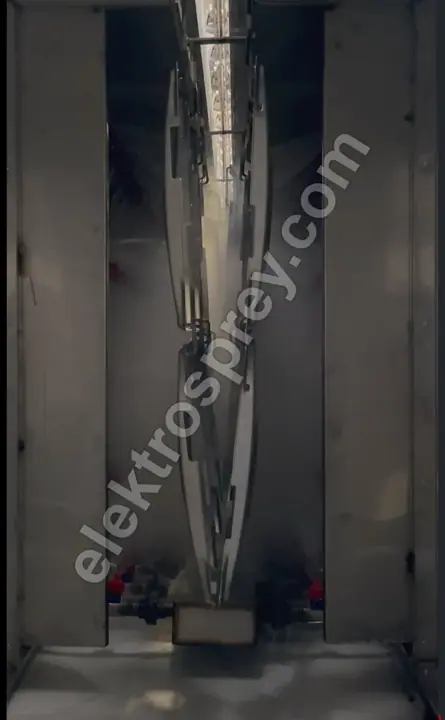
At the end of the pretreatment sequence the part has been cleaned and carries a conversion coating. That coating is a porous structure, and dissolved salts left behind by rinse water sit in those pores. Passivation — called final rinse, sealer or sealing on the shop floor — is the last wet stage that closes those pores, neutralises the remaining active sites and chemically stabilises the surface the paint will grip. It sits immediately before the dry-off oven.
Let us be equally clear about what it does not do. Passivation will not rescue a poor degrease, a blocked nozzle or an incomplete rinse. If an oil film is still on the surface, passivation simply works on top of that oil and the result is still blistering. It is not a correction stage; it is the stage that extends the life of pretreatment that was already done properly. If you are unsure about the health of your sequence, settle the stage layout first using how many pretreatment stages you need, then add passivation.
Effect on stage count: where passivation sits in the 3–7 band
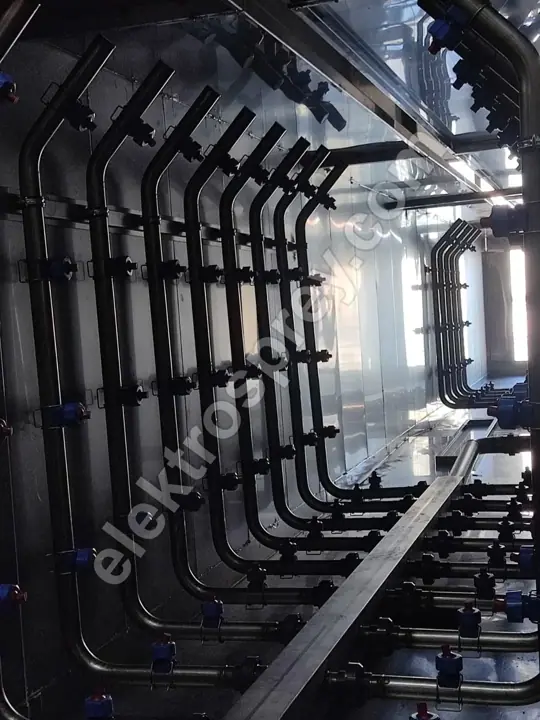
Passivation is one tank on its own, and it almost always demands a demineralised rinse ahead of it. In other words it usually occupies two stages on the line, not one. The table below shows typical layouts; which row you belong in is decided by where the part will live.
| Stage count | Typical sequence | Passivation | Typical work |
|---|---|---|---|
| 3 stages | Clean + coat → rinse → dry-off | No | Indoor shelving, enclosed sheet parts |
| 4 stages | Degrease → rinse → conversion → rinse | No | Indoor furniture, panels, cabinet bodies |
| 5 stages | Degrease → rinse → conversion → rinse → passivation | Yes | Mild outdoor exposure, commercial products |
| 6 stages | Degrease → rinse → activation → conversion → rinse → DI passivation | Yes | Appliance bodies, architectural profile |
| 7 stages | Degrease ×2 → rinse → conversion → rinse ×2 → DI passivation | Yes | Agricultural/construction machinery, severe corrosion |
The real message in that table: moving to passivation usually means going from 4 stages to 5 or 6, and on a tunnel line that means the tunnel gets longer. Every stage in a spray tunnel arrives with its own spray zone, its own drain-off distance and its own tank; if conveyor speed is to stay fixed, the added stage is paid for in metres. We run that calculation at the start when engineering a tunnel type powder coating plant, because squeezing a stage in afterwards usually means extending the whole tunnel.
A dip layout is more forgiving: on a dip surface treatment line passivation is one more tank, one more hoist station and one more immersion time added to the cycle. If you have floor space it is easy to add; if you do not, you pay for it in parts per hour.
What chrome-free alternatives bring
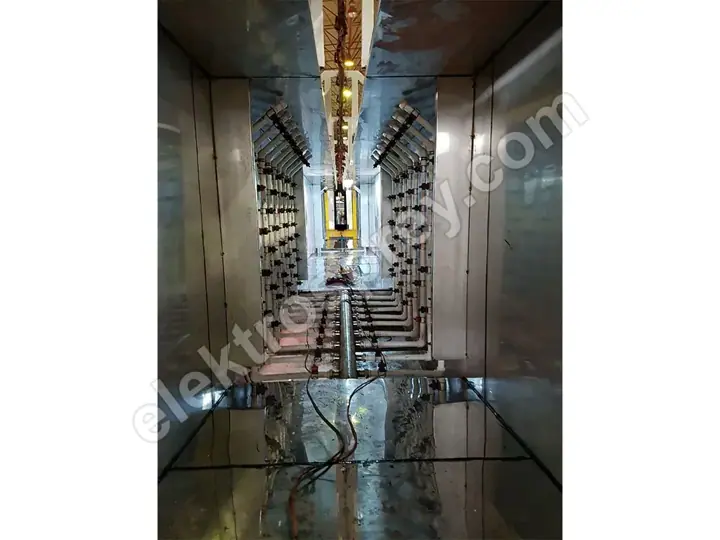
The contested part of classic final rinse chemistry was hexavalent chrome. Three families are met on the shop floor today, and the choice depends less on the chemistry than on the effluent infrastructure you already have.
| Passivation family | What it means on the line | Effluent / occupational load | Watch out for |
|---|---|---|---|
| Chrome-bearing traditional | Single tank, tolerant operation | Heavy: dedicated treatment, disposal, occupational procedures | Rejected in most export markets and customer specifications |
| Chrome-free inorganic (Zr/Ti based) | Single tank, low temperature | Low, close to standard treatment | Sensitive to water quality; DI rinse mandatory |
| Reactive organic / hybrid film | Single tank plus controlled dry-off | Low, but bath life must be tracked | Fragile while wet; dry-off regime is critical |
| DI rinse only (no passivation) | No extra tank, just a DI water circuit | Lowest | Fine where no corrosion promise is made; insufficient under commitment |
The shared price of the chrome-free families is this: their tolerance for water quality is low. A final rinse run on mains water can work in reverse and leave salts on the surface. That is why almost every line moving to chrome-free passivation also has to bring in a demineralised water circuit and conductivity monitoring. How that circuit is built and what exactly gets measured is covered separately in demineralised water and conductivity monitoring.
Water consumption and the operating side
The bill for a passivation stage arrives in three lines. First, water: the final rinse wants demineralised water, DI production costs more than raw water and brings resin or membrane maintenance with it. Second, drag-out: every part carries liquid over from the previous tank, the passivation bath is contaminated by that carry-over and has to be renewed periodically. Third, control labour: unless bath concentration, pH and rinse conductivity are logged per shift, the stage exists on paper and not on the floor.
The standard way to keep water use acceptable is counter-flow rinsing: clean DI water enters at the last stage and cascades backwards into the earlier rinses, with discharge taken from the dirtiest one. That layout alone recovers most of the fresh water demand created by adding passivation, and we specify it as standard when engineering a line.
State the downside plainly: adding passivation lengthens the line, increases tank count, changes the effluent load and demands measurement discipline. For a part that will stay indoors and is coated for appearance, none of that pays back. Add the stage because the product requires it, never because "more is better".
Where it is mandatory and where it is waste
Three questions settle the decision: where will the part live, what document does the customer want, and what warranty are you signing.
| Question | Passivation required | Passivation unnecessary |
|---|---|---|
| Service environment | Outdoors, humidity, salt air, chemical vapour | Enclosed, dry indoor space |
| What the specification says | Salt spray hours, ISO 12944 class, Qualicoat/GSB scope | Colour and appearance only |
| Substrate | Galvanised steel, aluminium profile, mixed substrates | Single grade cold rolled sheet, cosmetic work |
| Who carries the warranty | Surface warranty sits with you | Warranty sits on assembly or the part itself |
Aluminium deserves an extra note. In architectural aluminium, the workflows under Qualicoat and GSB treat the final rinse as part of the sequence, not as an option. Planning a line that coats aluminium profile without chrome-free passivation and DI rinsing means opening the line later and adding tanks.
If you have not yet chosen the conversion coating itself, do not build the sequence backwards: conversion chemistry first, passivation second. We compared iron phosphate, zinc phosphate and zirconium based nano-ceramic — and the stage load each of them carries — in phosphating or nano-ceramic; the passivation decision sits on top of that comparison.
Frequently asked questions
Can a salt spray commitment be given without passivation?
It can, but the risk is yours. Without it, the pores of the conversion coating stay open and under-film corrosion advances faster from any scribe or scratch. In practice the outcome depends not only on passivation but also on degreasing efficiency, rinse water cleanliness, the paint system and film thickness. If the specification names an hour figure, validate that figure with your paint supplier on panels prepared on your own line — do not rely on anyone's word.
What conductivity should the final rinse water have?
We cannot give you that number, and you should not trust a threshold picked up online. The acceptance limit is written in the data sheet of the passivation chemistry and the conversion coating you use, and it changes when the family changes. What you must do is get that limit in writing from your supplier, install in-line conductivity measurement, and log it per shift. The measuring point belongs at the outlet of the final rinse tank, not at the inlet of the DI water line.
How much longer will a passivation stage make my line?
On a tunnel line passivation usually means two stages: DI rinse plus passivation. The length follows from conveyor speed and the contact time each stage needs; hold the speed and the tunnel grows, hold the tunnel and the speed drops, taking parts per hour with it. We put numbers against that trade-off at the project stage — adding a stage afterwards is always the most expensive option.
If I switch to chrome-free passivation, can I keep my existing tanks?
Usually not, at least not as they stand. Chrome-free chemistries work in a different pH band, so tank, pump and nozzle materials and pipework gaskets have to be selected accordingly; residual cross-contamination will also spoil the bath from day one. If you are converting, assess material compatibility of the tank, a complete cleaning of the circuit and the DI supply together. Where those three are not completed, the trouble gets blamed on the chemical when it actually lives in the line.
Summary
Final rinse passivation is not a luxury; it is the hardware price of the quality promise you make. For parts that stay in dry indoor air and are judged on appearance, 3–4 stages are enough and adding passivation means a wasted tank, wasted water and wasted measurement. Once outdoor exposure, galvanised or aluminium substrates, a salt spray commitment or ISO 12944 / Qualicoat / GSB scope enters the picture, stage count moves into the 5–7 band and passivation becomes a natural part of the sequence. If you are moving to a chrome-free family, a demineralised water circuit and conductivity monitoring are not negotiable; take the threshold value from your chemical supplier's data sheet, and we will build the line so it can hold that threshold. Every pretreatment line we build is manufactured to the customer's largest part and delivered with a 2 year manufacturer's warranty.
Send us your substrate, the service environment and your customer's specification — we will work out together how many stages you need and how many metres passivation will add to your line.
For plants in the UK, North America and beyond
Where your line is installed shapes the paperwork, the power supply and the rules behind the choices described above.
- Pretreatment rinse water usually needs a discharge permit from the local water authority or municipality, whatever the size of the line. The chemistry you choose largely decides how much treatment is needed before discharge.
- For the UK, confirm with your importer whether UKCA or CE marking is expected. In the US and Canada, plan for UL or CSA requirements on the electrical side, and check any local documentation rules before shipment.
- For the UK, goods of Turkish origin move under the Türkiye–UK free trade agreement with an EUR.1 certificate or an origin declaration. For other destinations, the origin paperwork depends on that country's trade agreements, so check it with your importer early.
- North America runs at 60 Hz, and 480 V is common in industrial plants, so motors, fans and controls have to be specified for that supply from the start. Confirm the voltage and frequency on site before the line is designed.
Products mentioned: Dip Type Surface Treatment and Washing Line · Tunnel Type Electrostatic Powder Coating System
When you ask for a quote, tell us your country, supply voltage and frequency — get in touch.