
Before You Install a Gas Oven: How to Check Your Natural Gas Supply and Line Pressure
Once you have decided on a gas-fired oven, the schedule is set by the infrastructure rather than by the oven: your existing supply contract capacity, the line pressure and the regulator station. This article explains the order in which the gas project runs, what data must be collected before the oven goes into production, and which measurements are taken before commissioning.
 Enlarge
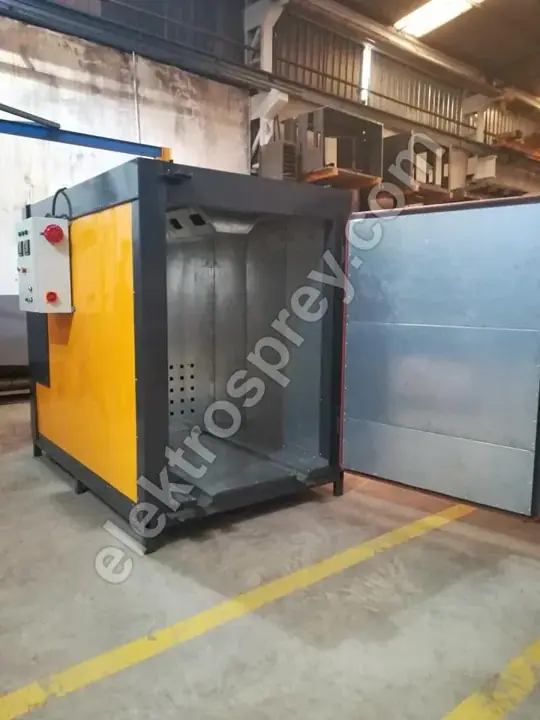
Whether your natural gas supply and line pressure are enough for a powder coating oven starts with one number: the burner rating. The top-loading pallet gas ovens we build are rated 50,000–500,000 kcal/h, and where you sit in that band decides whether your existing supply contract still covers your hourly draw. If it does, the job is limited to the internal piping project; if it does not, a capacity upgrade application usually takes longer than manufacturing the oven. So collect three things on the gas side — contracted capacity, the pressure class at the meter outlet, and the rating of the regulator station — before you place the order.
The most expensive delay we see on site is a sequencing error, not a technical fault: the oven is finished, the crew is on site, and the gas line is not there. The oven reaches operating temperature in 35–45 minutes; approving the gas project and pulling the line is measured in weeks. The sequence below exists to overlap those two schedules.
The order in which the gas work runs
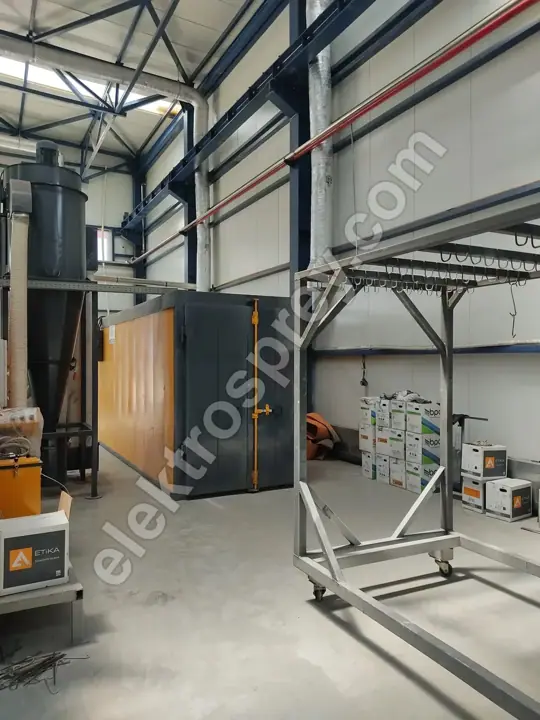
A natural gas connection runs in parallel with the coating line project. It is administered by the gas distribution company for your area, and the paperwork is prepared by a licensed gas installation design firm. As the machine manufacturer, our role is one link in that chain: stating in writing the burner rating, the gas inlet size and the minimum working pressure the oven requires. Your design firm carries the rest.
| Step | Action | Who runs it | Where it stalls |
|---|---|---|---|
| 1 | Establish existing contract and meter capacity | Plant + design firm | Old contract cannot be found |
| 2 | Calculate new total demand (existing + oven + boiler) | Design firm | Simultaneity is assumed away |
| 3 | Apply for a capacity upgrade or new connection | Plant to distribution company | Missing documents, tenancy status |
| 4 | Prepare the internal installation design and submit it | Licensed design firm | Oven data delivered late |
| 5 | Pipe routing, regulator and meter installation | Licensed contractor | Excavation, route, permits |
| 6 | Gas release, tightness test and commissioning | Distribution company + manufacturer | Flue or ventilation not compliant |
Step four is where buyers stall most often: the design firm cannot draw anything without the oven's technical data. Send the burner rating, gas inlet diameter and required minimum pressure the moment the order is placed — that single move saves weeks.
Does your existing supply cover the new oven?
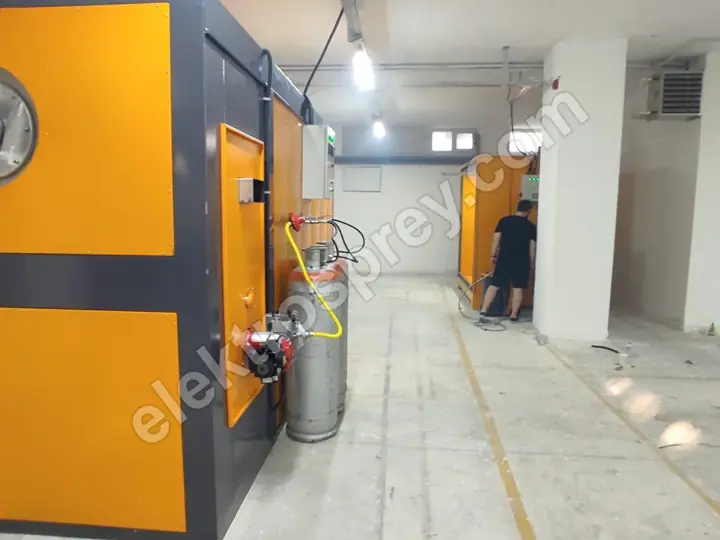
The calculation is done in hourly gas flow (m³/h), not kcal/h: divide the burner rating by the lower heating value of the gas, using the current figure your distribution company gives you rather than an estimate. Then add three items to that flow:
- Every other gas-fired item already installed: pretreatment tank boiler, drying oven, space heating, any heater serving the wet paint area.
- The sum of the loads that genuinely run at the same time in one shift. Do not be optimistic about simultaneity: on a winter morning the heating boiler and the oven ramp are both at full fire, and that is your peak.
- Near-term expansion. If a second oven or a tunnel type powder coating plant is on your plan, sizing the line for it today beats excavating twice.
The nameplate rating is peak draw, not continuous consumption. A top-loading pallet gas oven runs the burner at full fire during the 35–45 minute heat-up, then modulates down to cover losses. Contracted capacity is chosen against the peak; the energy budget is built on the average, and confusing the two produces both an oversized connection and a wrong cost expectation. For the cost side, use the method in powder coating oven energy consumption.
Line pressure: the value to measure before the oven arrives
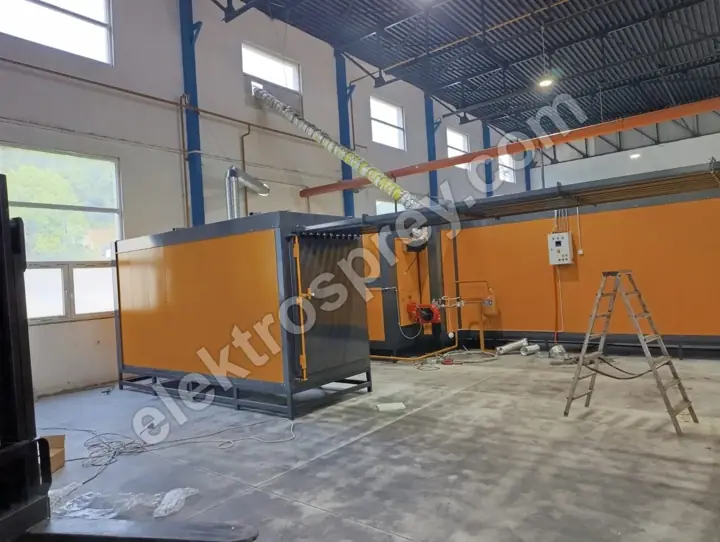
Even with sufficient capacity, low pressure keeps the burner off full fire. The number that matters is not the static reading at the meter outlet but the pressure at the oven's gas inlet flange while every load is running. The difference is the pressure drop in the piping, which long routes, undersized diameters and many elbows all enlarge.
We meet three situations. A plant fed at low pressure where the line becomes marginal once the new oven is added; the usual fix is a larger internal pipe diameter. A medium-pressure feed where the station regulator does not cover the new load; the fix is a regulator or station revision. And the most insidious: pressure that looks adequate on paper but sags at peak hour, which only a measurement under load catches.
The minimum inlet pressure stated by the burner maker is a condition of operation, not a recommendation. Below it the burner either locks out or runs on low fire, and the second case is worse: the oven reaches temperature late, cure time drifts, and the defect shows in the coating first. Reading that as a temperature problem and hunting for oven settings is the most common misdiagnosis we see.
| Measurement / check | When | Why it matters |
|---|---|---|
| Static pressure at meter outlet | During design | Confirms the supply class |
| Dynamic pressure at oven inlet (full fire) | Before commissioning | Shows the real pressure drop |
| Peak-hour reading (all loads on) | First winter shift | Catches the simultaneity error |
| Regulator station capacity | At application stage | Decides whether an upgrade is needed |
| Tightness test | Before gas release | Legal and safety requirement |
| Flue draught and flue gas analysis | At commissioning | Prevents incomplete combustion and lost efficiency |
Flue, ventilation and gas safety equipment
Gas release is usually held up by the room, not the line. The flue must be sized in cross-section and height against the burner rating, built from suitable material and able to handle condensate. The space needs fresh air intake and a gas detection and automatic shut-off arrangement; solenoid valve, detector and emergency stop chain are shown on the design. None of this is included in the price of the machine, so it belongs on your budget as separate lines — check them against the breakdown in our powder coating plant setup guide.
The top-loading pallet gas oven we build works in the 140–220 °C band and is delivered under CE and TS EN 1020, with the gas train and safety chain mounted on the machine. Everything from the meter to the oven flange is site work, governed by local regulation.
Does a difficult gas supply change the oven type decision?
It can. The choice is not made on running cost alone; contracted capacity, line pressure and the feasibility of a flue all enter it. A gas oven gives 30–40% lower energy cost, but that advantage has to pay back the one-off spend on gas infrastructure. If the payback is not short and the plant is small, a box type electric oven can be the more rational answer. For the full comparison see electric or gas powder coating oven; the equivalent question on the electrical side is in coating shop contracted power and transformer.
Frequently asked questions
Should I apply for the gas connection before ordering the oven?
The application needs the oven's technical data, but the preparation comes first. Before ordering, find out your contracted capacity, the pressure class at the meter outlet and the state of your regulator station. Once the order is placed, pass the burner rating, gas inlet diameter and minimum working pressure to your design firm so the two schedules run in parallel.
What happens if my contracted capacity is not enough?
You apply for a capacity upgrade. That step can take longer than any internal piping change and its outcome is not in your hands; on some sites it requires revising the regulator station or the feeder line. This is why the capacity check belongs at the start of the investment decision: you can always specify a smaller oven, but you usually cannot enlarge a gas line afterwards.
How do I know whether the line pressure is sufficient?
Only by measuring under load. Read the pressure at the oven's gas inlet flange with the burner at full fire and the plant's other gas-fired equipment running; it must stay above the minimum inlet pressure the burner maker specifies. A static reading with nothing running does not answer the question.
What symptoms does an oven show when gas pressure is low?
Heat-up takes longer, set temperature is reached late, and the burner either locks out repeatedly or stays on low fire. In the coating this reads as undercure: hardness and adhesion tests come out marginal, colour and gloss drift. Measure the inlet pressure under load before assuming it is an oven setting.
Can a tenant obtain a gas connection in a rented building?
Usually yes, but the landlord's consent and the building's documents are required, and it runs longer than for an owner-occupied plant. The lease term also affects the decision, because the gas line, regulator and flue stay with the building. In that scenario, evaluate the electric oven alternative seriously.
Summary
Once the gas oven decision is made, the schedule belongs to the infrastructure. In order: establish your contracted capacity, calculate the new total demand without being optimistic about simultaneity, open a capacity upgrade application early if you need one, hand the burner data to your design firm without delay, and measure the pressure under load before commissioning. The oven is built in the 50,000–500,000 kcal/h band around your largest part; the gas side is sized on site data, and if the two tracks do not run in parallel you end up with a finished oven and an unfinished line. Every oven we build carries a 2-year manufacturer warranty.
Send us your oven capacity, your existing supply details and the pressure class at your meter outlet — we will provide the technical data set your design firm needs, in writing, together with the commissioning requirements.