
Alkaline or Acidic Degreasing? Choosing by the Soil on Your Part
Alkaline degreasing saponifies oil and lifts it off; acidic degreasing dissolves oxide and light rust. Which one works on drawing oil, heavy protective grease, mill scale, laser-cut oxide and white rust on galvanised steel, plus the red lines on aluminium and the limits of combined cleaner-phosphate products.
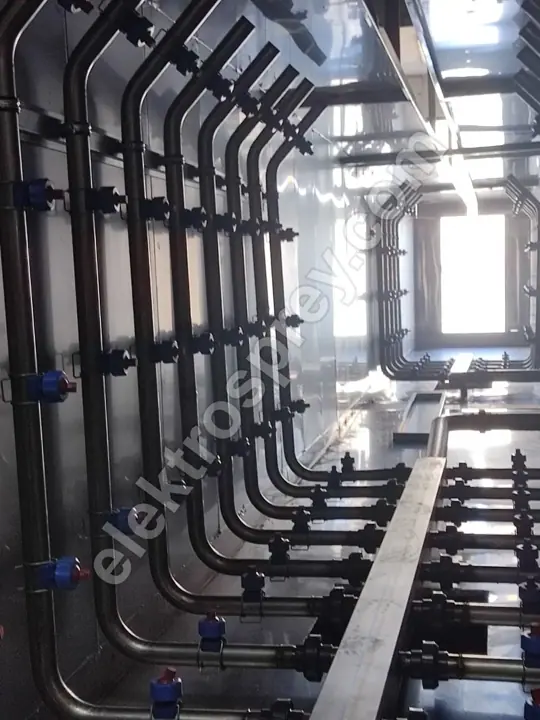 Enlarge
The difference between alkaline and acidic degreasing is the mechanism by which each removes soil: an alkaline cleaner saponifies oil and carries it away as an emulsion, an acidic cleaner dissolves the oxide layer and surface rust sitting on the metal. That is why the choice is not made by paint brand but by what is actually on the steel. Drawing oil, die lubricant or cutting fluid on the surface calls for alkaline; mill scale, flash rust or the oxide along a laser-cut edge calls for an acidic stage. When both are present — the most common case in real workshops — you either build two separate stages or push the line towards the upper end of the usual 3 to 7 stage range. Choosing wrong makes the first stage of pretreatment decorative: the part looks washed, the paint appears to hold, then it lifts at the edges or blisters from underneath at the first humid cycle.
The rule is simple: a chemical that does not recognise the soil will not remove it. The first question when specifying a pretreatment line is not "which cleaner should I buy" but "what is on my part". A line built without that answer runs short no matter how many stages it has.
You cannot choose a chemical before you identify the soil
Incoming steel rarely carries one kind of soil. It usually arrives in layers:
- Drawing and die oil. Mineral based, fluid, saponifies readily in alkaline. This is the classic target of pretreatment.
- Protective oil and grease. Applied so the steel does not rust in storage; viscous and stubborn, it demands contact time and heat.
- Cutting fluid emulsion. Water based, but its additives leave a film that shows up as staining under paint if rinsing is weak.
- Silicone release agents and weld spatter spray. The hardest item on the list; a standard alkaline bath will not take it off and it reappears as craters in the finish.
- Metal dust, swarf, grinding residue. Not a chemical problem — a mechanical one.
- Mill scale, flash rust, cut oxide. Alkaline does not touch these; acid or mechanical preparation is required.
- White rust on galvanised steel. Neither a standard alkaline nor a strong acid is the right answer; galvanised steel needs a formulation of its own.
None of this can be judged by eye alone. The fastest shop-floor method is the water break test: on a washed and rinsed part, a continuous, unbroken water film means the surface is free of oil, while water that beads up and pulls back in patches marks the spots where oil remains. Rust is judged visually: light surface reddening comes off in an acidic stage, but pitted corrosion does not come off with chemistry at all — that is a blasting job. For parts dominated by rust and cut oxide we set out the route in rusty and laser-cut surface preparation.
Alkaline degreasing: where it works, where it stops
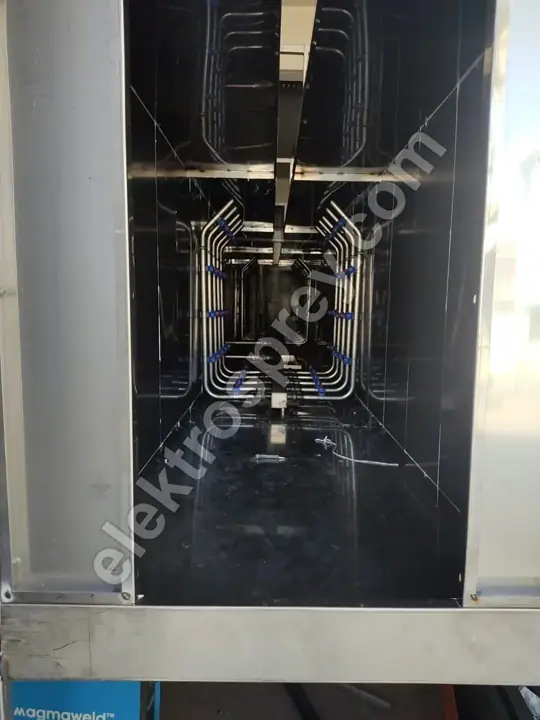
Alkaline degreasing works at the high end of the pH scale and uses three mechanisms together: saponifying oil, emulsifying the fraction that will not saponify with surfactants, and wetting under the soil so it releases from the metal. It works hot, and its performance falls disproportionately when the bath cools — which is why bath temperature is the most neglected and most decisive operating parameter in the whole line. The working window comes from the chemical supplier's data sheet; we covered what deviation actually costs in degreasing bath temperature.
Where it stops: alkaline does not dissolve oxide. Rust, mill scale and cut oxide are still there after the bath — in fact they become more visible once the oil film above them is gone. Second, strongly caustic formulations etch aluminium, galvanised steel, zinc alloys and some castings; aluminium darkens and roughens, galvanised steel loses zinc. Third, the bath saturates as oil load builds: the same bath that cleaned yesterday's parts fails on today's, not because the chemical has weakened but because it is full. Fourth, foam is a real problem in spray tunnels, so the alkaline product has to be a low-foam grade; in an immersion bath that concern largely disappears.
Acidic degreasing: where it works, where it stops
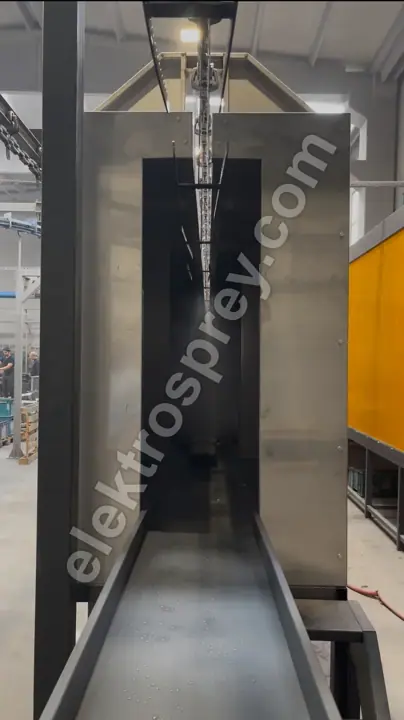
Acidic degreasing products carry acid and surfactant together: the acid dissolves the oxide layer and surface rust while the surfactant lifts light to medium oil. Because it does two jobs in one bath, it is favoured on short lines and in plants that are tight on floor space.
Where it stops: acid cannot get under heavy oil. With a thick oil film on the surface the acid never reaches the metal, the oxide stays put and the bath works for nothing. On heavily oiled parts the correct order is hot alkaline degreasing first, then the acidic stage. An acidic line also brings three operating items that must be planned from day one: the risk of flash rust after rinsing, the requirement that tanks, pumps and piping be acid resistant, and the neutralisation load on the effluent. Those three define not the capital cost of the line but the discipline needed to run it.
| Condition on the surface | Correct approach | Why |
|---|---|---|
| Drawing / die oil, fingerprints | Alkaline degreasing | Saponifies and emulsifies oil; not an acid's job |
| Heavy protective oil, grease | Hot alkaline + long contact | Without time and heat the viscous film stays; immersion has the edge here |
| Cutting fluid emulsion | Alkaline + strong rinsing | The residue is water based; the real risk is in the rinse, not the wash |
| Silicone release agent, weld spray | Special formulation + mechanical action | A standard bath will not take it; it returns as craters |
| Flash rust, thin mill scale | Acidic degreasing / pickling | Alkaline does not dissolve oxide |
| Laser / plasma cut edge oxide | Acidic stage or mechanical | Thermal oxide comes off only with acid or abrasion |
| White rust on galvanised steel | Mild galvanised-specific product | Strong alkali and strong acid both consume zinc |
| Heavy oil and rust together | Alkaline first, then acidic | Reverse the order and the acid never gets through the oil |
| Deep pitted corrosion | Blasting | This is where chemistry ends; that is the honest answer |
The metal sets the red lines
Soil type selects the family of chemistry; the metal tells you what you absolutely cannot use. In mixed-metal workshops this is where the real mistake is made: running mild steel sheet and aluminium profile through the same bath.
| Metal | Alkaline | Acidic | Critical note |
|---|---|---|---|
| Cold rolled steel sheet | Suitable | Suitable | The widest chemical tolerance of any substrate |
| Hot rolled / scaled steel | Fine for oil | Required for scale | If the scale is thick, mechanical removal is more economical |
| Galvanised sheet | Mild, caustic-free grades only | Short, controlled contact only | Overdo either and the zinc layer is gone |
| Aluminium and aluminium profile | Strong caustic PROHIBITED | Controlled etching is fine | A dedicated aluminium line is the healthiest answer |
| Stainless steel | Suitable | Avoid chloride-bearing grades | Chloride starts pitting corrosion on stainless |
| Castings | Suitable, rinsing of pores critical | Use care | Chemical trapped in pores blisters in the oven |
That is why aluminium-heavy production is usually given its own line layout, where the profile length sets the geometry; we describe that arrangement on the aluminium U type powder coating line page. Where mixed metals genuinely have to share a line, the only workable route is to select the chemistry for the most sensitive metal and make up the lost cleaning power on steel with longer contact time.
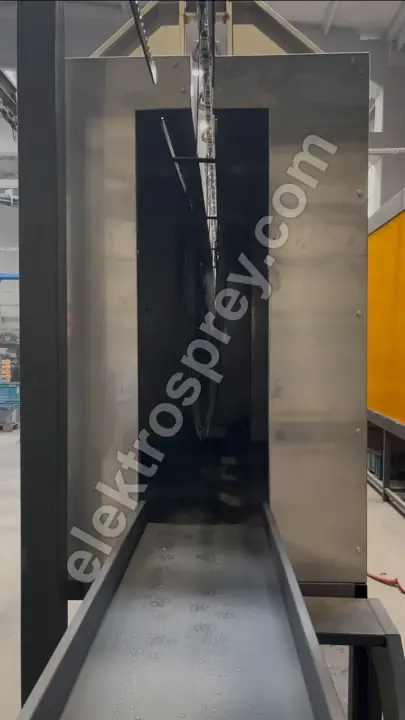
When a combined cleaner-phosphate stage makes sense
Acidic products that combine degreasing and iron phosphating in a single bath exist and, used in the right place, shorten a line considerably. Used in the wrong place, they do both jobs by halves.
| Criterion | Combined bath makes sense | Separate stages required |
|---|---|---|
| Oil load | Light to medium | Heavy die oil, grease |
| Range of metals | Single substrate, mostly mild steel | Mixed metals, aluminium and galvanised together |
| Throughput | Low to medium volume | Continuous high-capacity flow |
| Floor space | Restricted, short 3-stage line | Space available for 5 to 7 stages |
| Expected durability | Indoor, low corrosion load | Outdoor work with salt spray expectations |
The price of a combined bath is this: the same liquid has to carry the oil load and hold the phosphate chemistry in balance at the same time. As oil builds up, phosphate coating formation degrades, bath life shortens and control becomes twice as demanding. Decide the number of stages from the service environment of your part; we break that decision down by part type in how many pretreatment stages do you need. To see the whole investment and its sequence, our pillar guide powder coating plant setup guide is the right place to start.
The right chemical in a badly run bath achieves nothing
Chemical selection is half the decision; the other half is daily bath control. Free and total alkalinity in an alkaline bath, and the free-to-total acid ratio in an acidic one, are measured by titration, and replenishment follows that measurement — not the calendar. Temperature, contact time and mechanical action (pressure and nozzle layout in spray, dwell and movement in immersion) multiply the strength of whatever chemical you bought. In the rinse stages conductivity is monitored, and the bath is renewed when the threshold is exceeded.
If the part has internal surfaces, getting the chemical there is a separate question: on box sections, tubes and blind cavities even the best cleaner cannot be sprayed inside. For that geometry a dip surface treatment line is the only practical route. For high-volume, simple geometry, continuous flow wins and a tunnel type powder coating line runs at 500–5,000 parts/hour.
Frequently asked questions
Can alkaline degreasing be used on aluminium?
Yes, but not strongly caustic grades. Caustic etches the aluminium surface, and the result is darkening, roughening and an uneven appearance under the paint. Aluminium needs caustic-free mild alkaline products or controlled acidic ones. In a mixed-metal plant the chemistry is always chosen for the most sensitive metal; cleaning power lost on steel can be recovered with longer contact time, but an etched aluminium surface cannot be recovered at all.
Will acidic degreasing remove heavy die oil?
It will not. The surfactant content of acidic products is meant for light and medium oil; a thick viscous film stops the acid from ever reaching the metal. The outcome is the worst of both: the oil is not fully removed and the oxide is not dissolved. On heavily oiled parts the correct sequence is hot alkaline degreasing, then rinsing, then the acidic stage.
Can degreasing and phosphating be combined in one bath?
They can, and for workshops running lightly oiled, single-substrate parts destined for indoor use it is a reasonable choice. But because a combined bath has to balance two functions in one liquid, phosphate coating quality degrades as oil load rises, bath life shortens and analysis discipline gets harder. For outdoor parts with real corrosion expectations, keep degreasing and phosphating as separate stages.
How do you confirm the surface is genuinely free of oil?
With the water break test. Hold the rinsed part vertically and watch the water film: if it runs as a continuous, unbroken sheet, the surface is clean. If it breaks into droplets and pulls back in patches, oil remains there. The test costs nothing, takes seconds, and catches a defect that would otherwise only appear after painting. Repeat it at the start of every shift and after any chemical replenishment.
Which chemical removes laser-cut edge oxide?
Thermal oxide does not come off with alkaline; it requires an acidic stage or mechanical preparation. The cut edge is the hardest zone on the line because the oxide layer is not thin and it directly ruins paint adhesion. In plants processing large volumes of laser-cut parts, an acidic stage should be planned as a standard part of the line rather than an option.
When a bath weakens, is topping up the chemical enough?
Not always. If the measurement shows the concentration has dropped, replenishment is the right answer. But when the problem is contamination rather than concentration — the bath saturated with oil, or sludge built up on the floor of the tank — adding chemical achieves nothing and only raises cost. Titration combined with observation of the oil load tells the two apart: if the readings are normal but cleaning is poor, the bath needs to be renewed.
Summary
Alkaline degreasing saponifies oil and leaves rust untouched; acidic degreasing dissolves oxide but cannot get under heavy oil. The right choice is made by looking first at what the soil is and then at what the metal is: die oil and grease call for alkaline, mill scale and cut oxide call for an acidic stage, while strong caustic on aluminium and chloride-bearing formulations on stainless are red lines. Where heavy oil and rust are both present the order is fixed — alkaline first, acidic second. Combined cleaner-phosphate products make sense on short lines running lightly oiled, single-substrate work, and do not belong in high-capacity or outdoor-duty production. Whatever the chemistry, the line will not deliver what you expect without temperature, contact time, mechanical action and bath analysis. Every line we build is manufactured to the customer's largest part and delivered with a 2 year manufacturer's warranty.
Send us your metal type, the soil on the surface and your annual volume — we will set the stage sequence and the chemistry type together and engineer the line around them.